Embracing the Blessings of Mary's Intercession
Updated at: 2023-08-05 13:19:19 (3 years ago by Melkisedeck Leon Shine)
Embracing the Blessings of Mary's Intercession πΉ
The Blessed Virgin Mary holds a special place in the heart of every Catholic. ππΌ She is not only the Mother of God, but also our loving mother and intercessor.
Mary's intercession is a powerful gift from God. Through her prayers, she brings our intentions before her Son, Jesus, with a mother's love and compassion. π
Just as Mary interceded for others during her earthly life, she continues to intercede for us from heaven. π Her maternal care and protection are always available to those who seek her intercession.
Biblical examples highlight the importance of Mary's intercession. In the wedding at Cana, Mary noticed the couple's need for wine and interceded on their behalf, prompting Jesus to perform his first public miracle. π·β¨
The Catechism of the Catholic Church teaches us about Mary's role as our intercessor. It states, "Mary's prayer is revealed to us at the dawning of the fullness of timeβ¦She intercedes for the community of believers, of which she is the image." (CCC 2617) π
Saints throughout history have also attested to the power of Mary's intercession. St. Alphonsus Liguori once said, "She is our refuge, our consolation, and our advocate who will never abandon us." π
Embracing the blessings of Mary's intercession allows us to experience the depth of God's love and mercy. Her intercession can bring healing, peace, and guidance into our lives. π
Mary's intercession is particularly powerful when it comes to the salvation of souls. She desires that all her children be saved and draws us closer to her Son, who is the source of our salvation. βͺοΈβ€οΈ
The Rosary is a beautiful prayer that honors Mary and invites her intercession. Through the repetition of Hail Marys, we entrust our intentions to her maternal care, knowing that she will present them to Jesus. πΏ
Mary's intercession extends to all areas of our lives, from physical healing to spiritual growth. She is a loving mother who desires the very best for her children and will intercede for us in our time of need. πΊ
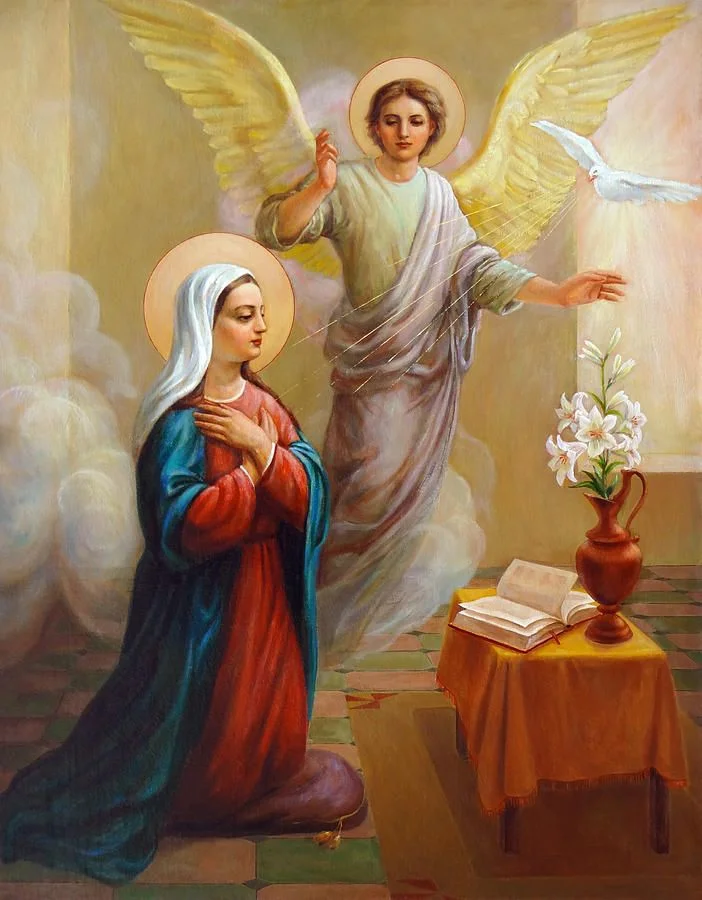
The Gospel of Luke recounts the Annunciation, where Mary's "yes" to God's plan of salvation forever changes the course of history. Her intercession reminds us of the importance of surrendering to God's will and trusting in His providence. π
Mary's intercession is not meant to replace our direct relationship with God, but rather to enhance it. She helps us draw closer to her Son, guiding us on the path of holiness and leading us to eternal life. π
As Catholics, we are called to imitate Mary's faith and humility. By embracing her intercession, we acknowledge that we are in need of her prayers and seek her guidance in our journey towards holiness. π
Let us not forget that Mary is the Mother of God, the Ark of the New Covenant, and the Queen of Heaven. Her intercession is rooted in her unique role in salvation history, and her prayers hold immense power before the throne of God. ππΉ
Embracing the blessings of Mary's intercession is an invitation to deepen our relationship with her and with her Son. Through her intercession, we can experience the overflowing love and mercy of God in our lives. ππΊ
In conclusion, the blessings of Mary's intercession are a gift that every Catholic can embrace. Her love, care, and prayers can bring healing, guidance, and peace into our lives. Reflecting on her example, let us open our hearts to her intercession and trust in her maternal care. How has Mary's intercession impacted your spiritual journey? Share your thoughts and experiences in the comments below! πΉππΌ
Updated at: 2025-06-05 11:27:56 (1 year ago by Melkisedeck Leon Shine)
The Efficacy of Marian Intercession in Catholic Spirituality
This article examines the theological basis and practical application of entrusting one's intentions to Mary, the mother of Jesus, within the context of Catholic faith. Key concepts to be explored include Marian intercession, the role of faith in prayer, and the significance of Marian devotions such as the Rosary. We will analyze these through the lens of theological doctrine, historical practice, and personal experience, drawing upon relevant biblical passages and Church teachings.
Theological Foundation of Marian Intercession
The Catholic Church venerates Mary, acknowledging her unique role in salvation history as the Mother of God. This is not worship, which is reserved solely for the Holy Trinity, but rather a recognition of her profound spiritual significance. The doctrine of the Immaculate Conception, proclaimed by Pope Pius IX, asserts Mary's freedom from original sin, highlighting her purity and suitability as a model of faith and obedience. This theological framework supports the understanding of Mary as a powerful intercessor, one who, through her profound relationship with God, can advocate for humanity's needs before Christ. This concept aligns with the principles of intercessory prayer found throughout Scripture, where individuals appeal to righteous figures for divine favor. The biblical narrative of the Wedding at Cana exemplifies Mary's intercession and Jesus' subsequent response, demonstrating the power of such prayer.
Mary as a Model of Faith and Obedience
Mary's unwavering faith and complete obedience to God's will serve as a paradigm for believers. The Magnificat, Mary's canticle of praise in Luke 1:46-55, exemplifies her profound trust in God's plan. Her acceptance of the divine mission to bear the Son of God demonstrates a level of faith that inspires devotion and emulation. By entrusting our intentions to Mary, we are not only seeking her intercession but also striving to cultivate the virtues of faith, humility, and obedience that she embodies. This mirrors the concept of spiritual mentorship and guidance often explored in various spiritual traditions.
Marian Devotions and the Power of Prayer
The Rosary, a central Marian devotion, provides a structured framework for prayer, meditation on the life of Christ, and contemplation of Mary's role in salvation history. The repetitive nature of the Rosary can facilitate a state of contemplative prayer, fostering a deeper connection with God and enhancing one's receptivity to divine grace. Many attest to the spiritual benefits and experiences of grace associated with this practice, highlighting the psychological and spiritual dimensions of faith.
The Efficacy of Intercessory Prayer
The belief in the efficacy of Marian intercession is grounded in the broader Catholic understanding of intercessory prayer. The Church teaches that prayers offered on behalf of others can be powerfully effective. This concept aligns with sociological models of social support, where the collective power of prayer and faith can provide comfort and strength during times of adversity. The countless testimonials of answered prayers and miraculous events attributed to Mary's intercession throughout history further support this belief within the context of Catholic tradition.
Conclusion and Recommendations
Entrusting one's intentions to Mary is a deeply rooted practice within Catholic spirituality, grounded in theological doctrine, supported by Marian devotions such as the Rosary, and sustained by centuries of personal testimonies. The efficacy of Marian intercession is understood within the broader framework of intercessory prayer and the Catholic belief in the power of faith and divine grace. Further research could explore the psychological and social dimensions of Marian devotion, examining its impact on the well-being of individuals and communities. This research could utilize qualitative methodologies such as interviews and case studies, allowing for a rich understanding of personal experiences with Marian intercession. The findings could have significant implications for pastoral care and spiritual guidance within the Catholic Church.
Reader Pool: Considering the theological arguments and personal experiences discussed, how does the concept of Marian intercession resonate with your understanding of faith and prayer?
Updated at: 2023-08-05 13:19:56 (3 years ago by Melkisedeck Leon Shine)
The Power of Pilgrimage to Marian Shrines πΉππ»
Introduction: Pilgrimages have always been an essential part of the Catholic faith, allowing believers to embark on a spiritual journey to deepen their connection with God and the saints. Among these holy sites, Marian shrines hold a special place of reverence and devotion. βͺοΈπΆπ»ββοΈ
The Importance of Marian Shrines: Marian shrines are dedicated to the Blessed Virgin Mary, the Mother of God. Throughout history, countless miracles, healings, and spiritual encounters have been reported by pilgrims who visit these sacred places. ππ»β¨
Mary's Role in Salvation: As a devout Catholic, I firmly believe that Mary holds a unique and powerful intercessory role in our salvation. Just as she stood by Jesus' side during His earthly life, she continues to guide and protect us as our spiritual mother. ππ©βπ¦
Biblical Examples: The Bible itself provides evidence of the significance of Mary's role. In the Gospel of Luke, the angel Gabriel greets Mary with the words, "Hail, full of grace, the Lord is with you" (Luke 1:28). This demonstrates her special favor with God and her pivotal role in the plan of salvation. ππΌπ»
The Power of Pilgrimage: Pilgrimage to Marian shrines allows us to experience the power of Mary's intercession in a tangible way. By physically visiting these holy sites, we open ourselves up to the grace and blessings that flow through her. It is a powerful spiritual journey that can transform our lives. ππ»β¨
Witnessing Miracles: Throughout history, numerous miracles have been attributed to the intercession of the Blessed Virgin Mary. From physical healings to conversions of hearts, these extraordinary events serve as a testament to her powerful intercession. πΉππ»
The Catechism of the Catholic Church: The Catechism affirms the importance of pilgrimages, stating that they can be "expressions of the condition of the pilgrim's life, which is to be a journeying toward God" (CCC 2691). This further emphasizes the spiritual significance of embarking on a pilgrimage to a Marian shrine. πππ»
Lourdes: A Testament to Mary's Power: One prominent example of a Marian shrine is Lourdes, where the Blessed Virgin Mary appeared to Saint Bernadette Soubirous in 1858. Since then, countless pilgrims have flocked to Lourdes, seeking healing and solace. The miraculous healings that have occurred there are a powerful testament to Mary's intercession. ππ¦
Fatima: A Call for Conversion: Another renowned Marian shrine is Fatima, where the Virgin Mary appeared to three shepherd children in 1917. Mary's message at Fatima called for repentance and conversion, emphasizing the importance of prayer and sacrifice. The devotion and prayers of pilgrims to Fatima continue to bring about spiritual transformation in the lives of many. ππ
Our Lady of Guadalupe: Patroness of the Americas: The story of Our Lady of Guadalupe is a remarkable example of Mary's love and care for all her children. Appearing to Saint Juan Diego in Mexico in 1531, she left an image of herself imprinted on his cloak. This image has become one of the most venerated and recognizable icons of the Catholic faith, illustrating Mary's special role as the Patroness of the Americas. πΉπ
The Pilgrim's Journey: Embarking on a pilgrimage to a Marian shrine is not merely a physical journey; it is a profound spiritual experience. It is an opportunity to detach ourselves from the distractions of everyday life and focus on our relationship with God through the intercession of the Blessed Virgin Mary. πΆπ»ββοΈπ£
Deepening Faith and Devotion: Pilgrimage allows us to immerse ourselves fully in our faith. By participating in the sacred rituals, praying the rosary, and reflecting on Mary's life, we can deepen our devotion and experience a renewed sense of spiritual vitality. ππ»β¨
The Communion of Saints: Throughout our pilgrimage, we are joined by a community of fellow believers and saints who have gone before us. We can seek their intercession and learn from their examples of faith, drawing strength and inspiration from their presence. ππ₯
A Call to All: Whether we have the opportunity to physically visit a Marian shrine or not, the power of Mary's intercession is accessible to all. Through prayer and devotion, we can invite her into our lives, seeking her guidance and protection. Mary, the Mother of God, is always ready to intercede for her children. ππ»π
Conclusion: In conclusion, the power of pilgrimage to Marian shrines is undeniable. Through these sacred journeys, we can experience the love and intercession of the Blessed Virgin Mary in a profound way. I encourage you to consider embarking on a pilgrimage to a Marian shrine or incorporating devotion to Mary into your spiritual life. May you be blessed abundantly through her powerful intercession! πΉππ»
What are your thoughts on pilgrimage to Marian shrines? Have you ever experienced a pilgrimage and felt the presence of Mary? Share your experiences and reflections below! ππ
Updated at: 2025-06-05 10:56:14 (1 year ago by Melkisedeck Leon Shine)
This article explores the theological concept of Mary, the mother of Jesus, as a conduit of divine grace within Catholic theology. We will examine key biblical passages, theological interpretations, and devotional practices to analyze her role in Christian spirituality. Central to this discussion are the concepts of theosis (the process of becoming more like God), intercession (prayer on behalf of others), and Marian devotion (religious practices centered on Mary). These concepts provide a framework for understanding the multifaceted role Mary plays within the Catholic faith.
1. The Annunciation and the Incarnation: The Foundation of Marian Theology
The angel Gabriel's greeting to Mary, "Hail, full of grace, the Lord is with thee," (Luke 1:28) marks the pivotal moment of the Annunciation. This salutation, rich in theological significance, establishes Mary's unique relationship with God and her pivotal role in the Incarnation. The acceptance of the divine mandateβchoosing to bear the Son of Godβpositions Mary as a crucial instrument in God's redemptive plan. This event is a cornerstone of Marian theology, showcasing Mary's complete surrender to God's will and her role as the Theotokos (God-bearer).
2. Mary as Intercessor: A Model of Faith and Prayer
The episode at the wedding feast in Cana (John 2:1-11), where Mary intercedes with Jesus on behalf of the wedding party, illustrates her role as a powerful intercessor. This event demonstrates not only her understanding of Jesus's divine power but also her compassionate concern for others and her faith in her Son's ability to perform miracles. Applying this concept practically, we see Mary's intercession as a powerful model for prayer: her actions highlight the importance of unwavering faith and persistent prayer in seeking divine intervention.
3. The Magnificat: A Proclamation of Divine Grace and Humility
Mary's Magnificat (Luke 1:46-55) is a profound prayer of praise and thanksgiving, reflecting the principles of kenosis (self-emptying) and theosis. Her humble acceptance of God's grace and her acknowledgment of His power are central to this prayer. This prayer serves as a potent example of recognizing the transformative power of grace, highlighting the importance of humility and receptivity in the pursuit of spiritual growth. The Magnificat underscores Mary's deep understanding of God's plan and her willingness to participate actively in it.
4. Marian Theology in the Catechism of the Catholic Church
The Catechism of the Catholic Church formally recognizes Mary as "the Mother of God" and "the model of the Church's faith." This declaration establishes the theological basis for Marian devotion, emphasizing Mary's unique position within Christian theology. The Church's recognition of Mary's role is not merely sentimental; it's grounded in scripture and tradition, recognizing her profound contribution to salvation history. The Catholic Church's understanding of Mary supports the concept of the Church as a "mother" reflecting nurturing and caring characteristics.
5. Marian Devotion Throughout History: Influential Figures and Practices
The history of Christianity is replete with examples of Marian devotion. The writings of saints like Louis de Montfort, who emphasizes entrusting oneself to Mary's maternal care in his "True Devotion to Mary," highlight the enduring significance of Marian piety. The Rosary, a traditional Catholic prayer, provides a structured framework for meditation on the mysteries of Christ's life, emphasizing Mary's role as a companion on the spiritual journey. These devotional practices offer practical avenues for spiritual development, fostering a deeper connection with God through Mary's intercession.
6. Mary: A Model of Faith and Obedience
Mary's response to the angel Gabriel, "Behold, I am the handmaid of the Lord; let it be to me according to your word" (Luke 1:38), exemplifies absolute faith and obedience to God's will. This willingness to submit completely to God's plan showcases the transformative potential of faith and the importance of surrendering personal will to God's divine plan. Mary's example serves as a model for all Christians, encouraging us to embrace God's will with humility and trust.
7. Mary's Continuing Intercession: Present and Future
Catholic belief affirms that Mary's intercession is not confined to the past; she continues to pray for humanity and advocates before God. This belief reinforces the concept of the Communion of Saints, highlighting the interconnectedness of believers in prayer and mutual support. This concept invites believers to engage in a continual dialogue of faith, recognizing Maryβs role as a spiritual mentor.
Conclusions and Recommendations
The examination of Marian theology reveals Mary's multifaceted role as a conduit of divine grace. From the Annunciation to her continuing intercession, her life offers a powerful model of faith, obedience, and humble service to God. Marian devotion, when properly understood, is not about venerating Mary herself but about acknowledging her unique place in salvation history and seeking her intercession to draw closer to Christ. Further research should explore the diverse expressions of Marian devotion across different cultures and theological traditions, emphasizing the universality and cultural relevance of Marian piety.
Reader Pool: How might a deeper understanding of Mary's role within the broader context of Catholic ecclesiology enrich personal spiritual growth and the development of community?
Updated at: 2023-08-05 13:19:42 (3 years ago by Melkisedeck Leon Shine)
Mary, Star of the Sea: Guiding Us to Christ π
πΉ Mary, the Blessed Virgin, holds a special place in the heart of every Catholic. As the Mother of God and the epitome of virtue, she is a guiding light for all Christians on their journey to Christ.
π Just as sailors look to the stars to navigate their way across the vast ocean, we too can look to Mary, Star of the Sea, to guide us through the stormy seas of life towards our ultimate destination: eternal union with Christ.
π Throughout the Bible, we see Mary's unwavering faith and her deep love for God. From the Annunciation, where she humbly accepted her role as the mother of Jesus (Luke 1:38), to her presence at the foot of the Cross (John 19:25-27), Mary's life is a testament to her complete surrender to God's will.
π In Luke 1:48, Mary herself proclaims, "For he has regarded the low estate of his handmaiden. For behold, henceforth all generations shall call me blessed." It is through her humility and obedience that Mary became the vessel through which God chose to bring His Son into the world.
π The Catechism of the Catholic Church teaches us that Mary's role as the Mother of God goes beyond her physical motherhood. She is also the spiritual mother of all believers: "In fact, by her maternal charity, Mary cares for the brethren of her Son, who still journey on earth, surrounded by dangers and difficulties, until they are led into their blessed home" (CCC 975).
π Through her intercession, Mary constantly intercedes for us before her Son. Just as at the wedding at Cana, when she asked Jesus to perform His first miracle (John 2:1-11), Mary continues to bring our needs and petitions before Him.
ποΈ In times of darkness and doubt, Mary provides us with a beacon of hope. She reminds us of God's unfailing love and mercy, encouraging us to trust in His divine plan for our lives. Like a guiding star in the night sky, Mary leads us closer to Christ, who is the light of the world.
π The saints throughout history have turned to Mary as their spiritual mother and guide. Saint Maximilian Kolbe, a martyr of the Holocaust, once said, "Never be afraid of loving the Blessed Virgin too much. You can never love her more than Jesus did."
π The rosary, a powerful prayer that leads us to contemplate the mysteries of Christ's life, is a beautiful way to honor Mary. In this meditative prayer, we unite ourselves with Mary as we reflect on the joys, sorrows, and glory of her Son.
πΉ The Hail Mary, a prayer deeply rooted in Scripture, reminds us of Mary's role in our spiritual journey: "Hail Mary, full of grace, the Lord is with thee; blessed art thou among women, and blessed is the fruit of thy womb, Jesus" (Luke 1:28, 42).
π« As we call upon Mary's intercession, she leads us to Christ, just as she led the shepherds and wise men to the manger where Jesus was born. She is the shining star that points us towards the One who is the Way, the Truth, and the Life (John 14:6).
π Mary's guidance is not limited to moments of joy and celebration; she also walks with us in times of suffering and sorrow. Just as she stood at the foot of the Cross, Mary stands by our side, offering us comfort and strength in our trials.
π The saints, too, found solace in Mary's loving presence. Saint Louis de Montfort wrote, "The more the Holy Spirit finds Mary, His dear and inseparable spouse, in any soul, the more active and mighty He becomes in producing Jesus Christ in that soul."
πΊ In our devotion to Mary, we are not worshipping her, but rather honoring her as the Mother of God and acknowledging her unique role in our salvation. She is the Star of the Sea, guiding us to Christ and drawing us closer to His love and mercy.
π What are your thoughts on Mary, Star of the Sea? How has she guided you to Christ in your own spiritual journey? Share your experiences and reflections in the comments below. May Mary, our loving Mother, continue to intercede for us and lead us to her Son, now and forever. Amen. π
Updated at: 2025-06-05 15:23:22 (1 year ago by Melkisedeck Leon Shine)
```htmlThis paper examines the documented apparitions and miracles attributed to the Virgin Mary, exploring their theological significance within the Catholic tradition and analyzing their historical context. Key concepts include Mariology (theological study of Mary), intercession (Mary's role in mediating between humanity and God), and apparition (a supernatural manifestation of a religious figure).
The Biblical Foundation of Marian Piety: The narratives of the Annunciation (Luke 1:26-38) and the Wedding at Cana (John 2:1-11) provide scriptural foundations for Marian devotion. The Annunciation establishes Mary's pivotal role in the Incarnation, highlighting her obedience and faith. Applying the concept of divine grace, we understand Mary's acceptance of God's will as a paradigm of faith, exhibiting a perfect response to God's initiative. The Wedding at Cana showcases her intercessory power, demonstrating how she brings human needs before Christ, illustrating the principle of mediatorship. This early portrayal lays the groundwork for centuries of understanding Mary as a powerful advocate for humanity.
Post-Biblical Marian Apparitions and their Impact: Numerous apparitions throughout history have significantly influenced religious belief and practice. These events, often analyzed through the lens of religious experience, have resulted in profound spiritual and social consequences. The apparition of Our Lady of Guadalupe, for example, profoundly impacted the evangelization of Mexico, demonstrating the power of religious symbols and narrative in shaping cultural identity. Applying the sociological concept of collective effervescence, this event generated a shared sense of religious fervor and community. The miraculous image on Juan Diego's tilma remains a powerful symbol of faith and cultural identity, persisting to this day.
Marian Apparitions and the Role of Intercession: The Catholic Church, in accordance with established doctrines and principles, examines claims of Marian apparitions using a rigorous process of investigation. Approved apparitions, such as Lourdes and Fatima, are studied through the framework of canonical law and historical analysis. These apparitions frequently emphasize prayer, repentance, and devotion to the Rosary. The messages, frequently conveying themes of conversion and social justice, serve as examples of the prophetic function of religious experience within a broader theological framework. The Fatima apparition, for instance, highlighted the importance of prayer and warning of the consequences of societal and spiritual decline, illustrating the power of religious visions in promoting moral and spiritual renewal. The efficacy of Mary's intercession is grounded in her unique relationship with God as the Mother of Jesus.
Marian Devotion and its Theological Significance: The Catholic Church distinguishes between veneration of Mary and the worship due only to God alone. Hyperdulia, the highest form of veneration, is reserved for Mary. This veneration is not worship but a recognition of her unique position in salvation history. Applying the concept of soteriology (the study of salvation), her role as the Mother of God is central to the understanding of Jesus's role as the savior of humanity. Her role as an exemplar of faith and obedience provides a model for Christian life, fostering piety and devotion. The emphasis on her role as intercessor stems from the belief in the interconnectedness of human prayer and divine grace.
The Continued Relevance of Marian Piety: The enduring appeal of Marian devotion highlights its capacity to provide solace, spiritual guidance, and a sense of connection to the divine. The numerous healings and conversions associated with Marian apparitions continue to inspire faith and devotion. Analyzing this from a psychological perspective, hope and comfort derived from such beliefs provide resilience to individuals during times of trial and hardship. The messages of peace, repentance, and prayer delivered through apparitions emphasize the enduring relevance of faith in a complex and often turbulent world. Further research into the psychological and sociological impact of Marian apparitions could shed light on the ways in which these experiences shape individual and collective identities.
The analysis of Marian apparitions and miracles reveals a complex interplay of theological doctrine, historical events, and personal religious experience. The study highlights the significance of Marian devotion in the Catholic faith, emphasizing her role as an intercessor and spiritual mother. From a sociological perspective, the analysis of these apparitions reveals the powerful role of religious symbols and narratives in shaping culture and individual identities. From a theological standpoint, the study affirms the importance of Mary's place within the broader framework of salvation history. Further research could explore the cross-cultural variations in Marian devotion, the psychological impact of Marian apparitions on individuals, and the intersection of Marian spirituality with contemporary social and ethical issues.
The enduring power of Marian apparitions suggests that their impact extends beyond the realm of personal religious experience to influence social dynamics and cultural landscapes. Future research might focus on a comparative analysis of Marian apparitions across different cultures, exploring the adaptive and transformative aspects of the Marian narrative in various contexts. A qualitative study exploring personal experiences and interpretations of these apparitions could enrich our understanding of their significance in contemporary faith.
Reader Pool: Considering the varied interpretations and historical contexts surrounding Marian apparitions, what criteria do you believe should be applied in evaluating the authenticity and theological significance of such events?
```
Updated at: 2025-06-05 13:03:20 (1 year ago by Melkisedeck Leon Shine)
```htmlIntroduction: This paper explores the concept of Marian intercession within the framework of Roman Catholic theology and examines historical and contemporary instances attributed to her influence. Key concepts such as intercession (the act of pleading on behalf of another), miracle (an event defying natural laws attributed to divine intervention), and grace (divine assistance given to humans) will be analyzed within the context of established theological frameworks. We will explore reported instances of Marian intercession through various lenses, including sociological, psychological, and theological perspectives, employing a phenomenological approach to analyze subjective experiences.
1. The Theological Basis of Marian Intercession: The Catechism of the Catholic Church affirms Mary's unique role as the Theotokos (God-bearer) and her consequent position of honor and intercession. This doctrine, rooted in Christological and ecclesiological principles, positions Mary as a model of faith and an intercessor before God. This is supported by the understanding of the communion of saints, a key tenet of Catholic theology, where the faithful in Heaven intercede for those on Earth.
2. The Wedding at Cana as a Paradigm: The Gospel of John (2:1-12) presents the wedding at Cana as a foundational example of Marian intercession. Mary's appeal to Jesus exemplifies her compassionate advocacy for human needs. This event, interpreted through a lens of relational theology, highlights the efficacy of intercessory prayer within the Trinitarian framework. Applying this concept, one can see the effectiveness of prayer as a conduit for divine grace mediated through interpersonal relationships.
3. Marian Apparitions and the Miracle of the Sun at Fatima: The reported apparition of Mary at Fatima in 1917, culminating in the "Miracle of the Sun," exemplifies a collective experience attributed to divine intervention. Analyzing this event requires consideration of social psychology, potentially involving group suggestibility and collective belief systems. However, from a theological perspective, the event is interpreted as a manifestation of God's power mediated through Mary's intercession, intended to strengthen faith and encourage repentance.
4. Reported Instances of Healing and Protection: Numerous accounts document instances of healing and protection attributed to Mary's intercession. These reports, while subjective, illustrate the power of faith and the human need for comfort and solace in times of distress. Applying a psychological framework, one could posit the impact of positive expectancy and the placebo effect in contributing to perceived healing. Theologically, these experiences are viewed as instances of God's grace, potentially mediated through Mary's intercessory prayers.
5. Marian Intercession and Spiritual Transformation: Accounts of conversions and spiritual transformations attributed to Marian devotion showcase the influence of faith on personal transformation. This transformative power can be interpreted through various theological perspectives, highlighting the role of grace in fostering personal growth and spiritual maturity. This aligns with the concept of sanctification, a process of spiritual growth and transformation guided by Godβs grace.
6. The Rosary and Devotional Practices: The Rosary, a devotional practice deeply rooted in Marian piety, provides a structured framework for prayer and meditation on the life of Christ. The repetitive nature of the prayer, from a psychological perspective, can induce a state of contemplative prayer, fostering spiritual growth and deepening faith. Theologically, the act of prayer is viewed as a means of communicating with God and seeking His grace, further enhanced by the intention of seeking Mary's intercession.
7. The Witness of the Saints: The consistent devotion to Mary expressed by numerous saints throughout history underscores the enduring power of Marian intercession within the tradition of the Catholic Church. The lives of saints, like St. Maximilian Kolbe, demonstrate faith in action and highlight the perceived impact of Maryβs intercession. This reinforces the theological concept of the communion of saints and the potential for heavenly intercessory support.
8. The Magnificat and the Model of Humility and Faith: Mary's Magnificat (Luke 1:46-55) exemplifies her humility and unwavering faith in God's plan. This model of faith and surrender provides an example for believers seeking a deeper relationship with God. From a psychological perspective, embracing humility and faith may enhance psychological well-being. From a theological standpoint, it is a model of how to engage in intercessory prayer.
Conclusions and Recommendations: The analysis of Marian intercession reveals a complex interplay of theological doctrines, psychological factors, and sociological phenomena. While the empirical evidence for miracles remains contested, the subjective experiences reported highlight the significance of faith and the human need for spiritual solace and guidance. Further research might explore the correlation between Marian devotion and psychological well-being, utilizing quantitative and qualitative methodologies to analyze the impact of prayer and faith on individuals' lives. The theological exploration of Marian intercession could further enrich our understanding of the dynamics of divine grace and the role of intercessory prayer within the Christian faith. Such research would necessitate a careful consideration of both anecdotal and empirical evidence, employing rigorous methodologies to address the complexities of the subject matter. The application of various theoretical frameworks could offer a multifaceted understanding of this profound and deeply personal spiritual practice.
Reader Pool: How might a deeper understanding of the psychological and sociological factors surrounding reported instances of Marian intercession inform our theological interpretations of these experiences?
```
Updated at: 2023-08-05 13:19:33 (3 years ago by Melkisedeck Leon Shine)
Mary's Maternal Love: A Shelter in Times of Struggle
Introduction: π In times of struggle, we often find solace and comfort in the love and support of our loved ones. For Christians, there is no greater source of maternal love and guidance than the Blessed Virgin Mary, the Mother of God. Mary's unwavering love and protection provide a shelter for our souls during challenging times, offering a sense of peace and hope. Let us delve into the depth of Mary's maternal love and how it can be a guiding light in our lives.
The Unconditional Love of a Mother: π As a mother, Mary embodied the essence of unconditional love. Her love for Jesus was pure and selfless, evident from the moment of His miraculous conception. In Luke 1:38, Mary humbly accepted the will of God, saying, "Behold, I am the handmaid of the Lord; let it be to me according to your word." Her love for her son knew no bounds, even in the face of unimaginable pain and heartache during His crucifixion. Mary's maternal love teaches us the importance of cherishing and protecting our loved ones, even in the most challenging circumstances.
Mary's Intercession: π The Blessed Virgin Mary, as the Mother of God, holds a special place in our hearts and in the eyes of the Church. Through her intercession, Mary brings our prayers before her Son, Jesus Christ. Just as Mary interceded at the wedding feast in Cana (John 2:1-11), she continues to intercede for us in our times of need. The Catechism of the Catholic Church (CCC 2677) affirms this belief, stating that "By her complete adherence to the Father's will, to his Son's redemptive work, and to every prompting of the Holy Spirit, the Virgin Mary is the Church's model of faith and charity. Thus, she is a 'preeminent and...wholly unique member of the Church.'"
A Guiding Light: π Mary's maternal love acts as a beacon of hope and guidance for all Christians. Just as she guided the shepherds to the newborn Jesus (Luke 2:8-20) and the Magi to Bethlehem (Matthew 2:1-12), Mary continues to lead us closer to her Son through her example and intercession. The saints, such as St. Louis de Montfort and St. Maximilian Kolbe, have written extensively about the importance and power of Mary's maternal love in our spiritual journey.
Mary's Shelter: π During times of struggle, we often seek refuge and protection. Mary, as our spiritual mother, provides a shelter for our weary souls. In his book "True Devotion to Mary," St. Louis de Montfort beautifully explains this concept: "Those who have given themselves to Jesus Christ through Mary may rest assured that they have chosen the better part and that it will not be taken from them." Mary's maternal love serves as a safe haven, where we can find peace, strength, and renewed faith.
Mary's Compassion: π The Blessed Virgin Mary's heart overflows with compassion for her children. Just as she compassionately stood at the foot of the Cross, witnessing the suffering and death of her Son, Mary empathizes with us in our own struggles. The words of St. Bernard of Clairvaux capture this sentiment: "In dangers, in distress, in doubts, think of Mary, call upon Mary. Let not her name depart from your lips; never suffer it to leave your heart."
The Rosary: πΏ One of the most powerful ways to connect with Mary's maternal love is through the recitation of the Rosary. As we meditate on the mysteries of Christ's life, Mary accompanies us on this spiritual journey. Pope Francis states in his encyclical "Lumen Fidei" that "the Virgin Mary teaches us what faith is, how we are to believe, in what manner we are to follow Christ in His Passion, His Cross, and His Resurrection."
Our Loving Advocate: πΉ The Catholic Church teaches that Mary is not only a loving mother but also our advocate and protector. In times of spiritual warfare or when facing temptation, we can turn to Mary for her powerful intercession. The Catechism of the Catholic Church (CCC 969) reminds us, "This motherhood of Mary in the order of grace continues uninterruptedly from the consent which she loyally gave at the Annunciation and which she sustained without wavering beneath the cross."
Mary's Maternal Love Throughout History: π Throughout history, countless individuals have experienced the tender love and protection of the Blessed Virgin Mary. Whether it be the miraculous appearances of Mary at Lourdes, Fatima, or Guadalupe, or the countless personal stories of healing and comfort attributed to her intercession, Mary's maternal love continues to touch lives in profound ways.
A Mother to All: π Mary's maternal love extends not only to Catholics but to all humanity. Just as Jesus entrusted His beloved disciple John to Mary's care (John 19:27), Mary embraces all of humanity as her children. This universal motherhood is beautifully described in the Catechism of the Catholic Church (CCC 963): "In her we contemplate what the Church already is in her mystery on her own 'pilgrimage of faith,' and what she will be in the homeland at the end of her journey."
Conclusion: πΉ In times of struggle, we can find solace, comfort, and guidance in Mary's maternal love. Her unwavering devotion to her Son, Jesus Christ, and her unconditional love for us as her children serve as a beautiful example of Christian love. Let us strive to deepen our relationship with Mary and seek her intercession in our lives. Have you experienced the comforting embrace of Mary's maternal love? Share your thoughts and experiences below.
Updated at: 2025-06-22 11:01:22 (1 year ago by Melkisedeck Leon Shine)
Article Title: Mary, Mother of God and Spiritual Guide: Navigating Life's Challenges through Marian Theology
Introduction: This article explores the multifaceted role of Mary, the Mother of God, within Roman Catholic theology, focusing on her significance as a source of guidance and support in overcoming life's challenges. Key concepts such as Marian theology, intercession, and the application of various Marian devotions will be examined through the lens of established theological principles and their practical application in the lives of believers. We will analyze Mary's life as presented in scripture and tradition, highlighting her virtues and demonstrating how they can inform our own spiritual journeys.
Mary's Unique Role in Salvation History: Mary's pivotal position in Christian theology stems from her role as the Theotokos, the God-bearer (Mother of God). This title, established by the Council of Ephesus in 431 AD, underscores her unique relationship with the Trinity. Her unwavering faith and obedience to God's will, as depicted in the Annunciation narrative (Luke 1:26-38), exemplify the virtues of humility and trust central to the Christian faith. This theological understanding of Mary is not simply a matter of historical veneration; it provides a framework for understanding her ongoing role as an intercessor and spiritual guide for believers. Applying this concept practically involves contemplating Mary's example of complete surrender to God's will, inspiring believers to cultivate a similar disposition of faith and obedience in their own lives.
The Intercession of Mary: The doctrine of Mary's intercession is based on the understanding of her unique relationship with Christ. As the Mother of God, she occupies a privileged position to advocate on behalf of humanity. This is not to suggest a bypassing of Christ, but rather an acknowledgment of the power of maternal prayer. The "Communion of Saints," a key theological concept, illustrates that the faithful departed continue to participate in the life of the Church and can intercede for the living. This concept, rooted in the belief in the unity of the Body of Christ, provides a theological basis for Mary's intercession. Examples such as the wedding at Cana (John 2:1-11) illustrate her role in bringing people's needs before Jesus. Practically, this means believers can confidently approach Mary in prayer, entrusting their petitions to her maternal care, knowing that she presents them to her Son.
Navigating Adversity through Marian Devotion: Mary's life, as presented in scripture and tradition, was not without its share of suffering and hardship. Yet, her unwavering faith remained a constant source of strength. This resonates deeply with believers facing their own trials. The model of "kenosis," or self-emptying, as seen in Christ, finds a parallel in Mary's humble acceptance of God's plan, even amidst pain and uncertainty. The application of this concept involves drawing strength from Mary's example to persevere in the face of adversity, maintaining faith and trust in God's providence. The practical application of this theory involves reflecting on Mary's unwavering faith and learning to surrender to God's will in times of personal hardship.
The Rosary and other Marian Devotions: The Rosary is a powerful example of Marian devotion. Its structure, based on meditating on the mysteries of Christ's life through the lens of Mary's experience, provides a framework for contemplative prayer. This aligns with the Ignatian spiritual exercises, which emphasize using imagination and reflection to draw closer to God. The Rosary, and other devotions, are not merely rituals; they are tools that foster a deeper relationship with Mary and ultimately with Christ. In practical application, the Rosary provides a structured path to contemplation and spiritual growth, bringing believers into a deeper communion with both Christ and his mother.
Mary's Immaculate Conception and Assumption: The dogma of the Immaculate Conception (proclaimed in 1854) affirms Mary's freedom from original sin, highlighting her unique role as the vessel chosen to bear the Son of God. The Assumption (proclaimed in 1950) emphasizes her bodily ascension into heaven, signifying the victory of life over death. These dogmas are not simply historical events; they are affirmations of God's grace and the ultimate triumph of good over evil. Their practical application motivates believers to strive for holiness, inspired by Mary's purity and the hope of eternal life. These doctrines offer a profound hope and inspiration to believers, reinforcing their faith in the power of God's grace and the promise of eternal life.
Mary as Spiritual Mother and Model of Discipleship: The Catholic Church venerates Mary not only as the mother of Jesus but also as the spiritual mother of believers. This maternal role underscores the Church's nurturing and protective nature. The concept of "maternal love," in theological terms, represents God's unwavering compassion and care for humanity. Mary, as a disciple of Jesus, provides a model of faithful obedience and unwavering devotion. Following this model involves cultivating a deeper personal relationship with Jesus and emulating Mary's virtues of faith, hope, and love. The practical application of this concept encourages Christians to see Mary as a guide in their spiritual journey, seeking her example of faithful service and devotion to Christ.
Mary in Art, Literature, and Culture: Artistic and literary depictions of Mary, throughout history, have played a significant role in shaping Catholic piety and theology. These representations, from iconic paintings like those of Raphael and Michelangelo to popular hymns and liturgical music, serve as powerful tools for catechesis and devotional practice. They embody the theological concepts discussed earlier, bringing abstract theological notions to life in a way that is accessible to a broader audience. This can enhance their understanding of Marian theology and their own relationship with faith.
Conclusion and Recommendations: Mary, the Mother of God, holds a central and enduring role in Catholic theology and spiritual practice. Her life, as presented in scripture and tradition, provides a powerful example of faith, obedience, and perseverance in the face of adversity. Through Marian devotions and the contemplation of her virtues, believers can draw strength and guidance in navigating life's challenges. Further research could explore the comparative analysis of Marian theology across different Christian denominations and cultures. Understanding the historical and cultural contexts of various Marian apparitions could also provide valuable insights. The enduring influence of Mary on the lives of believers across diverse cultures and historical periods warrants further scholarly investigation. The practical application of Marian theology encourages a deeper understanding of God's love, grace, and the transformative power of faith. This understanding has the potential to positively impact individuals, communities, and the broader church.
Reader Pool: How can a deeper understanding of Marian theology, and its practical application, enrich the spiritual lives of contemporary Catholics, particularly in navigating the challenges of the 21st century?

Updated at: 2025-06-05 14:50:55 (1 year ago by Melkisedeck Leon Shine)
```htmlThis article explores the multifaceted role of Mary within the theological framework of salvation history, employing key concepts from Catholic theology and relevant biblical interpretations. We will define key terms such as "economy of salvation," "intercession," and "Marian devotion" to establish a clear understanding of the subject matter.
Defining Key Concepts: The "economy of salvation" refers to God's plan of redemption, encompassing creation, the fall, the incarnation, Christ's ministry, death and resurrection, and the ultimate consummation of all things. "Intercession" describes the act of pleading on behalf of another, while "Marian devotion" encompasses various practices and beliefs centered on the veneration of Mary, mother of Jesus.
Mary's pivotal role in the economy of salvation stems from her unique status as the Theotokos, the God-bearer (Luke 1:43). This designation, established within the early Church, signifies her unparalleled participation in God's redemptive plan. The Annunciation narrative (Luke 1:26-38) exemplifies her complete submission to God's will ("fiat"), positioning her as the quintessential model of faith and obedience. This act of obedience, interpreted through the lens of theosis (deification), highlights her active cooperation in the Incarnation, initiating the process of humanity's reconciliation with God.
Mary's unwavering faith, as demonstrated in her acceptance of the Angel Gabriel's message, serves as a powerful example for believers. This resonates with the concept of "kenosis," or self-emptying, which Christ himself embodied. Mary's self-emptying surrender to God's plan directly parallels Christ's sacrifice, highlighting her crucial role in the redemptive process. Further, understanding Mary through the lens of typology reveals her as the "New Eve," contrasting the disobedience of Eve that led to the fall with Mary's obedience which facilitated humanity's redemption. This understanding aligns with the soteriological model that emphasizes the restoration of the broken relationship between God and humanity.
Catholic theology posits Mary's continued intercession on behalf of humanity. This is based on her ongoing communion with God and her intimate relationship with Jesus. Her intercession is not a substitution for personal prayer or a bypassing of Christ's mediatorial role; rather, it is a reflection of her ongoing maternal concern for humanity. This theological perspective resonates with the concept of "communion of saints," highlighting the interconnectedness of believers in their shared journey toward salvation. The various forms of Marian devotion, such as the Rosary and other Marian prayers, are understood as expressions of this belief and acts of spiritual communion with Mary.
Mary's role extends beyond her earthly life, culminating in her heavenly coronation as the Queen of Heaven (Revelation 12:1). This title, though symbolic, emphasizes her exalted position in the eschatological vision of the Church. Her presence in heavenly glory underscores the ultimate triumph of God's plan, emphasizing the complete restoration of creation and the eternal communion of the redeemed. This aligns with the ecclesiological understanding of the Church as the Mystical Body of Christ, with Mary occupying a place of honor within this heavenly community.
It is crucial to distinguish between the veneration of Mary and the worship of God. Catholic tradition unequivocally reserves worship for God alone; the veneration of Mary is an act of profound respect and honor given to the mother of God and a key figure in salvation history. This aligns with the principle of latria (worship due to God alone) and dulia (veneration accorded to saints and angels). This distinction is essential for maintaining the correct theological perspective on Maryβs role.
Maryβs role in the economy of salvation is a complex and deeply significant theological topic. Her unwavering faith, obedience, and active participation in God's redemptive plan make her a central figure in Catholic theology. Understanding her role allows for a richer appreciation of God's love and the power of human cooperation in God's grace. Future research could explore the comparative theological perspectives on Mary's role across different Christian denominations and investigate the evolving interpretations of Marian devotion throughout history. The emphasis should always remain on Jesus Christ as the ultimate source of salvation, with Mary's role being understood within the context of Christ's redemptive work.
Reader Pool: How might a deeper understanding of Mary's role within the systematic theology of salvation impact contemporary pastoral practice and spiritual formation?
```