Mary, Mother of Sorrows: A Companion in Our Suffering
Updated at: 2023-08-05 13:19:39 (2 years ago by Melkisedeck Leon Shine)
Mary, Mother of Sorrows: A Companion in Our Suffering ๐๐
The Virgin Mary, Mother of God, holds a special place in the hearts of Christians around the world. ๐ Her unwavering faith and courage serve as a beacon of hope and inspiration for those navigating the trials and tribulations of life.
In times of suffering, we can turn to Mary as a compassionate companion on our journey. ๐น She understands our pain, having endured unimaginable sorrows throughout her life.
One example of Mary's profound suffering can be found in the biblical account of her standing at the foot of the Cross during Jesus' crucifixion. As Jesus hung there, she witnessed her beloved son's agony and death. Yet, even in the midst of her own heartbreak, she remained steadfast in her faith. ๐
The Catechism of the Catholic Church beautifully describes Mary's role as a companion in our suffering, stating, "In her acceptance of this sorrowful burden, Mary became the Mother of all the living." (CCC 964) ๐
Mary's sorrows did not end with the crucifixion. She experienced the pain of exile in Egypt, the anxiety of losing Jesus in the temple, and the sorrow of witnessing his brutal crucifixion. ๐บ These experiences allow her to empathize with us during our own times of sorrow.
Just as Mary was present with Jesus during his moments of suffering, she is also present with us in our own pain. Her compassion knows no bounds, and she intercedes for us before her Son, seeking comfort and healing for our wounded souls. ๐
The saints have also recognized Mary's role as a companion in suffering. Saint Alphonsus Liguori once said, "The sorrows of Mary were the martyrs of her heart." ๐ Her deep love for humanity led her to share in our pain, offering solace and understanding.
Mary's willingness to embrace her sorrows serves as an example for us all. ๐น She teaches us that in our own suffering, we can find meaning and purpose if we unite our pain with the redemptive suffering of Christ on the Cross.
The Rosary, a powerful devotion in the Catholic Church, offers us a way to meditate on the sorrows of Mary. Through the Sorrowful Mysteries, we can reflect on her journey of suffering and find solace in her company. ๐ฟ
The Gospel of Luke tells us that Mary treasured and pondered all these things in her heart (Luke 2:19). As we face our own trials, we can follow in Mary's footsteps by entrusting our sorrows to her and allowing her to lead us closer to her Son.
Pope Francis has often spoken about the importance of turning to Mary in our times of need. In his encyclical "Lumen Fidei," he writes, "In the faith of the Virgin Mary, we find a model of how to communicate with God when darkness sets in." ๐
The Catholic Church holds a deep reverence for Mary, recognizing her as the Mother of God and the Queen of Heaven. Her maternal love extends to all of humanity, and she intercedes for us with her Son, Jesus Christ. ๐น
Through her sufferings, Mary teaches us perseverance, trust, and surrender to God's will. She reminds us that even in the midst of our pain, there is hope and redemption.
So, dear reader, when you find yourself in the midst of suffering, remember that Mary is there to accompany you. Turn to her in prayer, pour out your heart to her, and allow her to guide you closer to her Son. ๐
What are your thoughts on Mary, the Mother of Sorrows? How has she been a companion in your own journey of suffering? Share your experiences and insights below. ๐น๐ค
Updated at: 2025-06-05 10:59:16 (8 months ago by Melkisedeck Leon Shine)
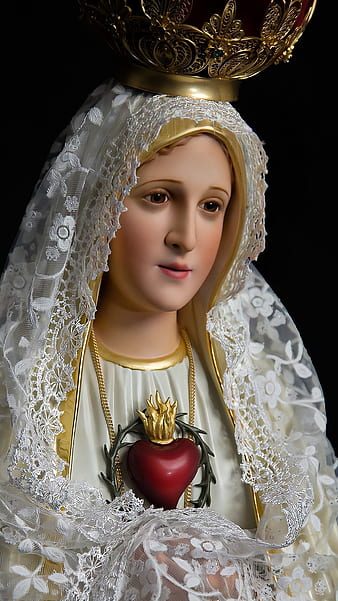
```htmlIntroduction: This paper explores the profound impact of devotion to Our Lady of Fatima, examining its theological underpinnings and practical applications within the framework of Catholic Marian theology. Key concepts, such as intercession (the act of a saint pleading on behalf of another before God), divine grace (God's unmerited favor), and theosis (deification or union with God), will be central to this analysis. We will explore how devotion to Mary, specifically as manifested in the Fatima apparitions, can facilitate spiritual growth, promote peace, and foster a deeper relationship with the divine.
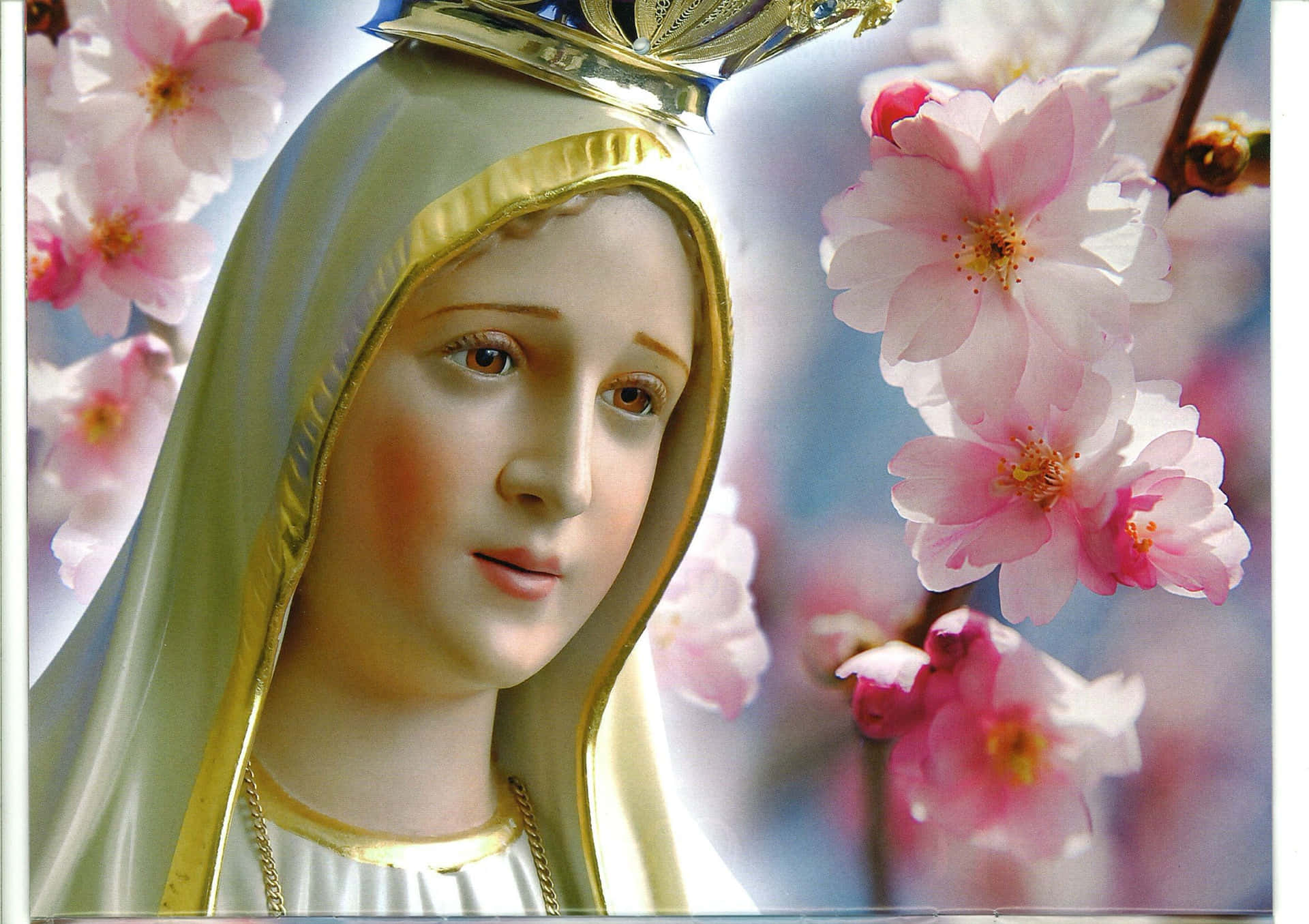
The Marian Intercessory Role and the Fatima Apparitions: The Catholic tradition emphasizes Mary's role as intercessor, a concept deeply rooted in scripture and theological tradition. The Fatima apparitions (1917), a pivotal event in modern Marian history, highlight Mary's continued concern for humanity. This event, witnessed by three children, served as a powerful manifestation of divine grace, reinforcing Mary's mediatorial role and emphasizing the importance of prayer, conversion, and peace. This aligns with the theological principle of divine pedagogyโGod's gradual revelation of himself through history and sacred scripture.
Mary as a Model of Faith and Obedience: Mary's unwavering obedience to God's will, as exemplified in the Annunciation (Luke 1:38), provides a powerful example of faith and surrender. This resonates with the concept of kenosis (self-emptying), a Christological concept also applicable to Mary's life, demonstrating her complete submission to the divine plan of salvation. Her life serves as a model for believers striving for deeper spiritual union through self-emptying and obedience.
The Power of Prayer and the Rosary: Devotion to Our Lady of Fatima often involves the recitation of the Rosary, a contemplative prayer that meditates on the mysteries of Christ's life. This practice fosters contemplation and strengthens the relationship between believer and God. Through repeated prayer and mindful reflection on the life of Christ, the believer engages in a process of lectio divina (divine reading), deepening their spiritual understanding and promoting a closer union with the divine.
The Call to Conversion and Repentance: The Fatima message strongly emphasizes the need for conversion and repentance. This aligns with the central message of the Gospel, calling for a turning away from sin and a return to God's grace. This process of conversion can be understood through the lens of metanoia (a transformation of the mind and heart), highlighting the importance of spiritual renewal and moral reformation.
Promoting Peace and Social Justice: The Fatima apparitions stressed the importance of peace and prayer for peace. This resonates with Catholic Social Teaching, which emphasizes the dignity of the human person and the pursuit of justice and peace. Our Lady of Fatima's message encourages us to be agents of peace and reconciliation, working towards social justice and a more equitable world.
Seeking Mary's Maternal Protection and Intercession: Devotion to Mary fosters a sense of trust and reliance on her maternal care. This aligns with the concept of Mary as the โMother of the Church,โ offering spiritual guidance and protection. This trust allows believers to approach God with confidence, knowing that they are supported by Mary's powerful intercession.
Spiritual and Physical Healing: Many testimonies attribute physical, emotional, and spiritual healing to the intercession of Our Lady of Fatima. While these claims require careful discernment, they highlight the power of faith and prayer in promoting healing and well-being. This aligns with the concept of sacramental efficacy, recognizing the potential for spiritual practices to facilitate healing and grace.
Strengthening Family Life and Promoting Holiness: Devotion to Our Lady of Fatima can strengthen family life through shared prayer and devotion. Mary's example of nurturing and caring for Jesus underscores the importance of faith-based family unity. Moreover, this devotion promotes a life of holiness, striving for virtue and imitating Christ, a process that reflects the concept of sanctification โ the ongoing process of becoming holy through God's grace.
Conclusion and Recommendations: This exploration of devotion to Our Lady of Fatima reveals its profound theological significance and its practical application in promoting spiritual growth, fostering peace, and strengthening faith. Further research could delve into empirical studies on the impact of Marian devotion on various aspects of well-being. The Fatima message serves as a timeless reminder of the importance of prayer, conversion, and the pursuit of peace. Integrating Marian devotion into pastoral care and spiritual direction can be beneficial for personal growth and community building. Promoting the principles of conversion, prayer, and peace through programs rooted in the message of Fatima can significantly impact individuals and communities.
Reader Pool: Considering the theological and historical context presented, what are your thoughts on the efficacy of Marian devotion in promoting individual and societal transformation?
```
Updated at: 2025-06-05 12:25:57 (8 months ago by Melkisedeck Leon Shine)
Introduction: Defining Key Concepts
This discourse explores the theological and practical implications of consecrating marriages and families to the Blessed Virgin Mary. We will define consecration as a formal act of dedicating oneself, one's marital union, and one's family to Mary's maternal protection and guidance, recognizing her role as intercessor and spiritual mother within the Catholic tradition. We will examine this practice through the lens of various theological frameworks, including the concept of Marian intercession, the model of the Holy Family, and the transformative power of grace as understood within Catholic theology. The exploration will draw upon biblical examples, the teachings of the Catechism of the Catholic Church, and the lived experiences of Catholic saints. The aim is to provide a comprehensive understanding of the potential benefits and spiritual enrichment derived from Marian consecration for modern families.
Theological Underpinnings of Marian Consecration
The act of consecration to Mary stems from the fundamental Catholic belief in her unique role within the economy of salvation. The Catechism of the Catholic Church emphasizes Mary's perfect embodiment of the Church and her inseparable connection to the saving work of her Son (CCC 971). This foundational understanding supports the belief in her powerful intercession. This intercession, as exemplified in the wedding at Cana (John 2:1-11), demonstrates Mary's capacity to intervene in human affairs, bringing divine grace to bear on situations of need and distress. The concept of intercession here refers to Maryโs act of pleading on behalf of humanity before God, empowered by her divine motherhood and close relationship with Jesus Christ. This is not a belief in Mary possessing independent divine power, but a recognition of her unique position of influence.
The Holy Family as a Paradigm of Consecrated Life
The Holy Family, consisting of Mary, Joseph, and Jesus, serves as the archetypal model of a life consecrated to God. Their unwavering faith, mutual love, and dedication to the divine will provide a powerful example for contemporary families. Applying family systems theory, we can see the Holy Family as a functional system characterized by strong relational bonds, clear boundaries, and effective communication, all fostered by their deep faith. This model highlights the importance of a shared spiritual foundation in building strong, resilient family units. Through consecration to Mary, families seek to emulate this model, cultivating an atmosphere of love, faith, and obedience within their homes.
Marian Consecration and the Enhancement of Marital and Family Relationships
The practice of consecrating one's marriage and family to Mary offers numerous potential benefits, strengthening the bonds of unity and love. Within the context of marital and family therapy, consecration can be viewed as a commitment to a shared spiritual journey, providing a common framework for navigating challenges and fostering resilience. This shared faith can enhance communication, empathy, and conflict-resolution skills. By drawing upon Mary's example of humility, obedience, and unwavering faith, couples can learn to approach their marital relationship with greater selflessness and mutual respect. Furthermore, the shared commitment to Mary's intercession fosters a deeper sense of belonging and spiritual support within the family.
Spiritual Growth and the Reception of Grace
Consecration to Mary is not merely a ritualistic act but a pathway to spiritual growth and the reception of divine grace. According to Catholic theology, Mary's intercession acts as a conduit for God's grace, facilitating blessings and spiritual progress. The concept of grace, in this context, refers to Godโs freely given gift of divine assistance enabling spiritual growth. This grace manifests in various ways, including the strength to overcome challenges, deeper appreciation for one another, and increased capacity for selfless love. Through prayer and devotion to Mary, families can cultivate an environment conducive to personal transformation and spiritual enrichment.
The Legacy of the Saints and the Power of Example
Throughout history, countless saints have exemplified the transformative power of devotion to Mary. Saints like Maximilian Kolbe, who consecrated his life to the Immaculate Heart of Mary, serve as inspiring examples of unwavering faith and selfless service. These examples demonstrate the tangible impact of Marian consecration on individual lives and the broader world. The saintsโ lives highlight the potential for personal transformation and the ability to channel oneโs devotion into actions of compassion and sacrifice. Their experiences serve as encouragement and inspiration to those considering embarking on a similar path of consecration.
Conclusion and Recommendations
The practice of consecrating marriages and families to Mary, rooted in rich theological tradition and exemplified by the lives of saints, offers a powerful pathway to spiritual growth, marital enrichment, and familial unity. The evidence suggests that this practice facilitates enhanced communication, improved conflict resolution, increased resilience, and a deeper sense of spiritual connection. Further research could explore the empirical effects of Marian consecration on marital satisfaction, family well-being, and the spiritual lives of individuals and families. Qualitative studies, involving in-depth interviews with families practicing Marian consecration, could illuminate the lived experiences and benefits associated with this devotional practice. This research could inform the development of pastoral resources and support programs that encourage and guide families in their journey of consecration. The positive impact of Marian consecration is multifaceted, extending beyond individual spiritual benefits to enhance family dynamics and strengthen the community. The long-term influence on society could be substantial, fostering stronger families, more compassionate communities, and ultimately, a more devout and faith-filled world. It is crucial that this practice be understood within its proper theological context, emphasizing Mary's role as intercessor rather than attributing to her any divine power.
Reader Pool:
Considering the theoretical and practical aspects discussed, how might a comprehensive evaluation of Marian consecrationโs impact on modern families be designed to ensure both theological accuracy and methodological rigor?
Updated at: 2025-06-20 20:54:19 (7 months ago by Melkisedeck Leon Shine)
Introduction: Defining Key Concepts
This discourse examines the multifaceted role of Mary, the Mother of God, within the Catholic Church, focusing on her significance as a unifying figure. We will explore her theological status, scriptural basis, and the impact of Marian devotion on ecclesial cohesion. Key concepts informing this analysis include ecclesiology (the study of the nature and structure of the Church), Christology (the study of the person and nature of Christ), and Mariology (the theological study of Mary). We will also engage with concepts from social psychology, examining how shared beliefs and practices, such as Marian devotion, contribute to group identity and social cohesion.
Mary's Theological Role and Scriptural Foundation
Catholic doctrine posits Mary's unique role in salvation history, beginning with the Annunciation (Luke 1:26-38). The angel Gabriel's greeting, "Hail, full of grace, the Lord is with you," highlights her privileged status as the Theotokos (God-bearer). This divine election is not merely a historical event but a foundational element of Christology, as Mary's consent to God's plan is inextricably linked to the Incarnation. Her Magnificat (Luke 1:46-55), a hymn of praise reflecting both humility and unwavering faith, further illustrates her integral part in God's redemptive work. Applying the concept of divine agency, we see Mary as a willing participant in the divine plan, instrumental in bringing about the salvation offered through Jesus Christ.
Mary as "Mother of the Church": A Title with Profound Implications
Pope Paul VI's declaration of Mary as "Mother of the Church" in 1964 formalized a long-held belief, highlighting her spiritual motherhood over all believers. This title transcends a merely symbolic designation; it reflects a deep theological understanding of Mary's continued intercession and spiritual guidance for the Church. This concept connects to the sociological principle of social identity theory, where shared beliefs and practices, in this case devotion to Mary, reinforce a sense of belonging and collective identity among Catholics. This role is further explored in the Catechism of the Catholic Church, which emphasizes her unwavering faith and cooperation in God's plan from the Annunciation to the Cross as continuous and vital to the Church's life.
The Unifying Power of Marian Devotion and its Practical Manifestations
Marian devotion, encompassing practices such as the Rosary, the Hail Mary, and May devotions, is a significant aspect of Catholic spirituality. These practices serve not only as expressions of personal faith but also as unifying rituals, strengthening social bonds within the Catholic community. This relates to Durkheim's theory of collective effervescence, where shared religious practices foster a sense of heightened social unity and collective identity. The lives and writings of numerous saints, such as St. Louis de Montfort, further exemplify the profound impact of Marian devotion on spiritual growth and the cultivation of a deeper relationship with Jesus Christ. The emphasis on Mary's role as a model of faith, obedience, and trust provides a powerful ethical and spiritual example for all believers.
Marian Apparitions, the Eucharist, and the Universal Reach of Mary's Influence
Reported Marian apparitions, such as Our Lady of Guadalupe and Fatima, offer another dimension to Mary's role, serving as potent symbols of her continued presence and intercession. These apparitions, while requiring careful discernment, have undeniably shaped the faith and devotion of countless individuals. Furthermore, Mary's profound connection to the Eucharist, the central sacrament of the Catholic faith, underlines her essential role in the ongoing mystery of Christโs presence in the Church. This connection underscores her ongoing participation in the salvific work of Christ and reinforces the unity of faith. Her universal maternal love transcends cultural and geographical boundaries, creating a sense of global unity among Catholics through a shared spiritual connection.
Conclusions and Recommendations
Mary, Mother of the Church, plays a pivotal role in fostering ecclesial unity within Catholicism. Her theological status, grounded in scripture and tradition, combined with the unifying power of Marian devotion, contributes significantly to the sense of collective identity and shared faith among Catholics. Further research should explore the sociological and psychological dimensions of Marian devotion, investigating its impact on social cohesion, religious practice, and individual spiritual development across diverse cultural contexts. The findings could provide valuable insights into the dynamics of religious identity and community formation. In pastoral contexts, promoting Marian devotion as a means of strengthening ecclesial unity and fostering a deeper appreciation of Mary's role in salvation history should remain a priority. The continued theological exploration of Mariology and its implications for contemporary ecclesial life is essential for a richer understanding of the Church's identity and mission.
Reader Pool: Considering the multifaceted theological and sociological dimensions presented, how might a deeper understanding of Mary's role contribute to fostering greater unity and dialogue within and beyond the Catholic Church?
Updated at: 2023-08-05 13:19:43 (2 years ago by Melkisedeck Leon Shine)
Mary, Mother of Perpetual Help: A Source of Comfort ๐
When we think of the Virgin Mary, a sense of peace and serenity washes over us. As Catholics, we hold a special place in our hearts for Mary, the Mother of God. Her unwavering faith and unconditional love for her son Jesus make her a source of comfort and inspiration in our lives.
Throughout the Bible, we see countless examples of Mary's profound role in salvation history. From the Annunciation, where she humbly accepted the call to become the mother of Jesus (Luke 1:26-38), to her presence at the foot of the cross, enduring unimaginable pain as her son suffered for our sins (John 19:25-27), Mary's unwavering faith in God's plan serves as a beacon of hope for us all.
The Catechism of the Catholic Church beautifully describes Mary's role in God's plan of salvation: "Mary's role in the Church is inseparable from her union with Christ and flows directly from it" (CCC 964). This reminds us that Mary's relationship with Jesus is not just a historical event, but a living reality that we can still experience today.
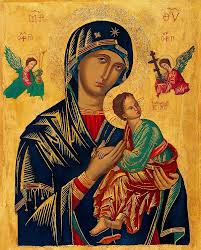
As Catholics, we turn to Mary in times of need, seeking her intercession and comfort. The image of Mary, Mother of Perpetual Help, is particularly special to us. This icon, depicting Mary holding the child Jesus, reminds us that she is always there to help us and guide us towards her son.
In the Gospel of John, Jesus entrusted Mary to be the mother of all believers when He said to the beloved disciple, "Here is your mother" (John 19:27). This signifies that Mary's role extends beyond her earthly life and into our lives as well.
The devotion to Mary, Mother of Perpetual Help, has been cherished by Catholics for centuries. This icon, believed to have been created in the 15th century, has brought comfort and solace to countless individuals. Its vibrant colors and tender depiction of Mary and Jesus serve as a visual reminder of the love and compassion they have for us.
Saint Alphonsus Liguori, a great saint of the Catholic Church, once said, "If you ever feel distressed during your day, call upon our Lady. Just say this simple prayer: 'Mary, Mother of Jesus, please be a mother to me now.' I must admit, this prayer has never failed me."
In times of uncertainty and despair, we can find solace in Mary's ever-present love and guidance. Just as a mother comforts her child, Mary offers us the comfort and reassurance we need to navigate life's challenges. We can confide in her, knowing that she understands our struggles and desires to bring us closer to her son.
The rosary, a powerful prayer tool in the Catholic faith, is another way we can seek comfort through Mary's intercession. By meditating on the mysteries of the rosary, we are invited to reflect on key moments in the life of Jesus and Mary, deepening our connection to them and finding solace in their presence.
The Catechism of the Catholic Church states, "By asking Mary to pray for us, we acknowledge ourselves to be poor sinners and we address ourselves to the 'Mother of Mercy,' the All-Holy One" (CCC 2677). Mary's intercession is a reminder that she is always ready to assist us and bring our needs before her Son.
Saints throughout history have also testified to the comforting presence of Mary in their lives. Saint Padre Pio once said, "Love the Madonna and pray the Rosary, for her Rosary is the weapon against the evils of the world today. All graces given by God pass through the Blessed Mother."
Mary, Mother of Perpetual Help, reminds us that we are never alone in our struggles. She is a constant source of comfort, guiding us towards her Son and interceding for us before the throne of God. Like a loving mother, she desires nothing more than our happiness and eternal salvation.
So, dear friends, in times of turmoil and uncertainty, let us turn to Mary, the Mother of Perpetual Help. Let us seek her intercession, pour out our hearts to her, and trust in her maternal care. Just as she comforted and supported Jesus throughout His life, she is here for us, offering her motherly comfort and guidance.
What does Mary, Mother of Perpetual Help, mean to you? How has her intercession and comfort impacted your life? Share your thoughts and experiences in the comments below. Let us continue to honor and cherish the blessed Virgin Mary, our source of comfort and inspiration. ๐น
May the loving presence of Mary, Mother of Perpetual Help, bring you peace, comfort, and guidance in all aspects of your life. May her intercession lead you closer to her Son, Jesus, and may you always find solace in her tender embrace.
Updated at: 2025-06-05 12:45:13 (8 months ago by Melkisedeck Leon Shine)
```htmlThis article explores the significance of Mary, the mother of Jesus, as a figure of comfort and spiritual refuge within the Christian faith. We will examine her role through various theological lenses, including Marian theology, biblical accounts, and the lived experiences of believers. Key concepts such as intercession (the act of praying on behalf of others), theotokos (God-bearer, a title for Mary), and spiritual motherhood will be defined and applied throughout the discussion.
Mary's Role as Intercessor and Model of Faith: The concept of Mary as an intercessor is central to Catholic and many other Christian traditions. This stems from her unique relationship with God as the theotokos, a title reflecting her pivotal role in the Incarnation. Mary's unwavering faith and obedience, as evidenced in the Annunciation (Luke 1:26-38), serve as a potent example of trust in God's plan, even amidst uncertainty and potential hardship. This exemplifies the application of the virtue of faith within the framework of existential psychology: Maryโs unwavering belief, even in the face of the unknown, provides a model for believers grappling with uncertainty and adversity.
Biblical Narrative and Mary's Presence in Times of Crisis: The Gospels portray Mary as a steadfast presence in moments of profound crisis. At the foot of the cross (John 19:25-27), her unwavering love and devotion offer a powerful image of resilience and enduring faith in the face of suffering. This scene, often interpreted through a lens of attachment theory, highlights the importance of secure attachment figures in times of stress. Mary's presence offered Jesus comfort and support, providing a powerful model for the importance of spiritual support systems during times of personal and emotional turmoil. Her steadfastness models the resilience necessary for navigating challenging situations.
Mary's Representation in Theological Discourse and Tradition: The Catechism of the Catholic Church emphasizes Mary's role as a model of faith and charity, highlighting her complete adherence to God's will. This aligns with the concept of virtue ethics, emphasizing the cultivation of virtuous character traits. Mary's life, interpreted through this lens, offers a pathway toward spiritual maturity. The writings of saints like Bernard of Clairvaux, who encouraged devotion to Mary as a source of strength, further solidify her role as a spiritual refuge in various Christian traditions. This sustained devotion across centuries underscores the enduring power of Maryโs image in sustaining faith.
Mary in Contemporary Spiritual Practice: The Rosary, a traditional Catholic devotional practice, offers a structured approach to meditating on the life of Christ and Mary. This structured approach can be analyzed through the framework of cognitive behavioral therapy (CBT), suggesting that the repetitive nature of the prayers and the reflective focus on Christโs life can be a tool for reducing anxiety and fostering emotional regulation. The practice allows for consistent interaction with Maryโs life story, potentially fostering a sense of connection and comfort.
Mary as a Spiritual Mother and the Concept of Spiritual Motherhood: The Gospel account of Jesus entrusting Mary to John (John 19:27) is often interpreted as establishing Mary's role as spiritual mother to believers. The concept of spiritual motherhood extends beyond the biological, representing spiritual guidance, nurturing, and advocacy. Through the lens of social support theory, we understand how vital such figures are to well-being and resilience. Mary's spiritual motherhood offers believers a sense of belonging, support, and guidance in their spiritual journeys.
This exploration reveals the multifaceted significance of Mary within Christian spirituality. Her role as intercessor, model of faith, and spiritual mother provides a rich source of comfort and strength, particularly during times of personal and collective turmoil. The consistent portrayal of Mary across biblical narratives, theological discourse, and devotional practices suggests a profound and enduring influence on believers' spiritual lives. Further research could explore the comparative impact of Maryโs role across different Christian denominations, focusing on variations in Marian devotion and their impact on believersโ experiences. The findings could inform pastoral practices and encourage the development of supportive spiritual resources for individuals navigating challenging life events. Understanding the psychological and spiritual benefits of Marian devotion can deepen the appreciation of its role in promoting faith, resilience, and well-being.
Reader Pool: Considering the theological interpretations and psychological perspectives presented, how might the concept of Mary as a spiritual refuge be further developed to enhance the well-being of individuals facing contemporary challenges?
```
Updated at: 2023-08-05 13:20:00 (2 years ago by Melkisedeck Leon Shine)
The Power of Consecrating Our Lives to Mary
๐ Introduction: The Virgin Mary holds a special place in the heart of every Christian Catholic. She is the Mother of God, chosen by God Himself to give birth to our Savior, Jesus Christ. Consecrating our lives to Mary means dedicating ourselves entirely to her, seeking her intercession and guidance in our daily struggles and triumphs.
๐ The Example of the Saints: Throughout history, numerous Catholic saints have consecrated their lives to Mary. They recognized her as a powerful intercessor and relied on her maternal love. Saint Louis de Montfort, for example, spoke of total consecration to Mary as a way to become a "slave of love" to Jesus through her. By imitating the saints, we can learn the transformative power of consecrating our lives to Mary.
๐ Our Spiritual Mother: Consecrating our lives to Mary means acknowledging her as our spiritual mother. Just as Jesus entrusted His beloved disciple John to Mary at the foot of the cross (John 19:26-27), we too can entrust ourselves to her loving care. The Catechism of the Catholic Church teaches that Mary's motherhood extends to all disciples of her Son, making her a universal spiritual mother to all believers (CCC 963).
๐น Mary as Our Intercessor: Mary's role as our heavenly advocate is a powerful reason to consecrate our lives to her. In the wedding at Cana, she interceded on behalf of the newlyweds when they ran out of wine (John 2:1-11). Just as she brought their need to Jesus, she brings our petitions to Him as well. By consecrating ourselves to Mary, we open ourselves to her powerful intercession in our lives.
๐ Biblical Examples: The Bible gives us various examples of individuals consecrating their lives to God through Mary's intercession. In Luke 1:38, Mary responds to the angel Gabriel's message by saying, "Behold, I am the handmaid of the Lord; let it be done to me according to your word." Her complete surrender to God's will serves as an inspiration for us to consecrate our lives to her, allowing her to guide us closer to Jesus.
๐ The Rosary: Consecrating our lives to Mary often involves a deep devotion to the Rosary. This powerful prayer allows us to meditate on the significant moments of Jesus' life as seen through Mary's eyes. Through the Rosary, we can unite ourselves with Mary's heart, drawing closer to Jesus and experiencing His love and mercy in a profound way.
๐ The Graces of Consecration: When we consecrate our lives to Mary, we open ourselves to a multitude of graces. Saint Maximilian Kolbe, a Franciscan friar and martyr, believed that by entrusting ourselves to Mary, we become instruments in her hands to bring about the conversion and sanctification of souls. Mary desires to lead us to her Son and shower us with His grace.
๐ The Influence of Mary: Consecrating our lives to Mary allows her to have a profound impact on our spiritual journey. Saint Teresa of Calcutta, also known as Mother Teresa, once said, "If you ever feel distressed during your day, call upon our Lady, just say this simple prayer: 'Mary, Mother of Jesus, please be a mother to me now.'" By inviting Mary into our lives, we allow her to guide us through both the joys and challenges we face.
๐ Mary's Assumption: The dogma of the Assumption of Mary teaches us that she was taken body and soul into heaven at the end of her earthly life. As Catholics, we believe that Mary's Assumption shows us the destiny that awaits all those who faithfully follow Christ. By consecrating our lives to Mary, we align ourselves with her example and hope for the ultimate union with God in heaven.
๐ The Joy of Consecration: Consecrating our lives to Mary brings immense joy and peace. Saint John Paul II once said, "Do not be afraid of loving Mary too much. You can never love her more than Jesus did." When we consecrate our lives to Mary, we experience the love of a mother who points us towards her Son, leading us to a deeper relationship with Him.
๐น Through Mary to Jesus: Consecrating our lives to Mary does not mean worshiping her, as some misunderstand. Rather, it is an acknowledgment of her unique role in salvation history and a way to draw closer to Jesus. Just as Mary pointed others to Jesus during His earthly life, she continues to do so today. By consecrating ourselves to her, we allow her to guide us to an intimate relationship with her Son.
๐ Mary's Fiat: Mary's "yes" to God's plan is a profound example of trust and surrender. By consecrating our lives to Mary, we follow in her footsteps and imitate her complete submission to God's will. Like Mary, we can say "yes" to God's plan for our lives, trusting that He will guide us and fulfill His promises.
๐ Consecration Prayer: One of the most popular prayers for consecrating our lives to Mary is the "Act of Consecration to Mary" composed by Saint Louis de Montfort. This beautiful prayer acknowledges Mary as our Queen and asks for her guidance and protection. By praying this prayer daily, we deepen our consecration and open ourselves to Mary's loving care.
๐ Life Transformed: Consecrating our lives to Mary is a transformative journey. Just as Mary's life was completely changed when she received the message of the angel Gabriel, our lives too can be transformed by her intercession and guidance. By consecrating ourselves to her, we invite her into every aspect of our lives, allowing her to mold us into the image of her Son.
๐ Conclusion: The power of consecrating our lives to Mary is immeasurable. She is our advocate, our guide, and our loving mother. By entrusting ourselves to her, we experience a deep and intimate union with Jesus. As we reflect on the examples of the saints, the teachings of the Church, and the words of Scripture, let us consider consecrating our lives to Mary and invite her to journey with us towards holiness. What are your thoughts on consecrating our lives to Mary? How has she impacted your spiritual journey?
Updated at: 2025-07-03 10:40:59 (7 months ago by Melkisedeck Leon Shine)
Introduction: This discourse examines the theological significance and practical implications of devotion to the Immaculate Heart of Mary within the Catholic tradition. We will analyze key Marian dogmas, their historical context, and contemporary relevance, utilizing theological frameworks and examples from scripture and tradition to illustrate the depth and richness of this devotion. Key concepts, including the Immaculate Conception, Marian intercession, and the theological underpinnings of the Rosary, will be defined and analyzed within their respective historical and theological contexts. We will explore how these concepts manifest in practical application for believers today.
1. Mary's Unique Role in Salvation History (Catechism of the Catholic Church): The Catechism of the Catholic Church explicitly affirms Mary's unique and indispensable role in salvation history, emphasizing her active participation in God's salvific plan. Her roles as Theotokos (Mother of God) and "first disciple" underscore her exemplary faith and obedience, serving as a powerful model for Christian discipleship. This aligns with the ecclesiological principle of the communion of saints, highlighting the interconnectedness of all believers in Christ's redemptive work. The practical application here encourages emulation of Mary's steadfast faith and obedience, understanding her life as a model for navigating challenges and embracing God's will. This encourages active engagement in oneโs own spiritual journey, striving for a deeper connection with God through commitment and faith.
2. The Immaculate Conception and the Purity of Heart: The dogma of the Immaculate Conception, declaring Mary's freedom from original sin from her conception, is fundamental to understanding her Immaculate Heart. Defined in 1854, this dogma establishes Mary as uniquely prepared to conceive and bear the Son of God. This purity is not merely the absence of sin, but a radical openness to God's grace, making her a paragon of faithful discipleship. Applying this, we see the importance of striving for interior purity โ not a flawless state, but a constant pursuit of holiness through God's grace, reflected in actions aligned with Godโs will. This process of sanctification, mirroring Mary's example, is a journey of transformation through active participation in the life of grace.
3. The Fiat of Mary and the Embrace of Divine Will: Mary's "Fiat," her unqualified "yes" to God's plan at the Annunciation (Luke 1:38), epitomizes complete surrender to the divine will. This act of profound faith serves as a paradigm for Christian living, urging acceptance of God's plan, even amidst uncertainty or suffering. This embodies the concept of *kenosis*, self-emptying, as described in Philippians 2:7. Practically, cultivating a spirit of obedience and trust involves seeking God's guidance in decisions, accepting challenges as opportunities for spiritual growth, and embracing a life centered on God's plan rather than one's own self-determined will.
4. Marian Intercession and the Role of Mediation: Catholic tradition highlights Mary's role as intercessor, mediating between humanity and God. This intercession doesn't circumvent Christ's unique mediatorship but reflects her profound union with Him. This aligns with the principle of the communion of saints, where believers intercede for each other. The wedding at Cana (John 2:1-11) illustrates this intercessory role. Practically, this means acknowledging Mary's role in presenting our needs to Christ, fostering a spirit of humble prayer, and trusting in her compassionate maternal care. This approach cultivates a deep sense of reliance on the power of communal prayer and the grace of divine intervention through Maryโs mediation.
5. Symbolism of the Immaculate Heart and the Sorrowful Mother: The image of the Immaculate Heart, often shown pierced with thorns, symbolizes Mary's profound compassion and suffering alongside her Son. This powerful visual representation fosters empathy and understanding of suffering as an intrinsic part of the human condition and the Christian faith. Applying this symbolically encourages compassion, understanding the suffering of others, and recognizing that shared suffering fosters deeper spiritual connection and empathy within the communion of saints. The image simultaneously conveys both Mary's unwavering love and her profound sorrow, allowing believers to connect with her experience of intense joy and profound grief.
6. Marian Promises and the Abundance of Grace: The promises associated with devotion to the Immaculate Heart emphasize spiritual graces and protection offered to those who embrace this devotion. These promises, rooted in tradition and expressed through various Marian apparitions, invite us to seek God's abundant grace, facilitated through Mary's intercession. Practically, this encourages trust in God's providence and recognition of the abundance of grace available to those who actively seek it through prayer and faithful devotion to Mary. This understanding fosters a deeper relationship with God and the cultivation of a trustful and faithful spirit.
7. Fatima and the Call to Conversion: The 1917 Marian apparitions at Fatima emphasize the urgency of conversion, prayer, and devotion to her Immaculate Heart. The messages stress repentance and prayer as crucial in overcoming human challenges. Applying this message today requires critical self-examination, recognizing the need for personal and collective conversion, embracing prayer to foster peace and justice. This entails a commitment to living out the Gospel message in daily life and promoting social justice and peace. The messages from Fatima have a continued relevance in a world struggling with moral and social issues.
8. The Rosary and Contemplative Prayer: The Rosary, a traditional Marian devotion, provides a framework for contemplative prayer focusing on the mysteries of Christ's life. Rooted in *Lectio Divina*, it encourages reflection, deepening understanding of salvation history and fostering closeness with Christ and Mary. Applying this in a modern context emphasizes the importance of regular contemplative prayer for spiritual renewal and growth, enhancing connection with the divine. Regular, structured prayer, such as the Rosary, allows for increased focus and deeper reflection on the mysteries of faith.
9. The Example of the Saints and the Propagation of Devotion: The lives of saints demonstrating unwavering devotion to Mary, such as St. Maximilian Kolbe, showcase the transformative power of Marian devotion. Their dedication to spreading this devotion highlights its importance and ability to inspire holiness and charitable acts. Applying this reminds us of the significance of following Church teachings and imitating virtuous examples, illustrating the deep connection between Marian devotion and spiritual growth. This suggests the transformative power of devout lives and their impact on inspiring others towards holiness.
10. The Assumption and Coronation: The Culmination of Maryโs Role: The dogmas of the Assumption and Coronation affirm Mary's ultimate triumph over death and her reign as Queen of Heaven and Earth, underscoring her exalted position and perpetual intercession. Applying this reminds us of the ultimate victory of good over evil and hope for our eventual reunification with God. These doctrines highlight the ultimate victory of faith and the promise of salvation, strengthening oneโs hope in the face of life's challenges.
Conclusions and Recommendations: Devotion to the Immaculate Heart of Mary, firmly grounded in Catholic doctrines and centuries of tradition, provides a path to spiritual growth and deeper communion with God. It emphasizes faith, obedience, prayer, and compassion. This devotion is deeply theological, highlighting Mary's unique role in salvation history and its ongoing relevance for contemporary Christians. Future research could explore comparative analyses of various Marian devotions across cultures and their respective impacts on individual and community faith. Investigating the practical application of this devotion in promoting social justice and peace initiatives warrants further study. Analyzing specific Marian apparitions and their contemporary interpretations could provide deeper insights into the devotion's significance.
Reader Pool: Considering the diverse theological perspectives within Catholicism, how can a balanced and inclusive approach to Marian devotion promote spiritual growth and unity among believers while addressing potential concerns about hyper-Marianism?
Updated at: 2023-08-05 13:19:48 (2 years ago by Melkisedeck Leon Shine)
The Power of Consecration to the Immaculate Heart of Mary
๐น Have you ever considered the immense power that lies within the act of consecration to the Immaculate Heart of Mary? This beautiful devotion, rooted in the teachings of the Catholic Church, holds a profound spiritual significance for believers around the world. In this article, we will explore the reasons why consecration to the Immaculate Heart of Mary is such a powerful and transformative practice. Let us embark on this journey together, as we delve into the depths of this sacred devotion.
1๏ธโฃ The Immaculate Heart of Mary is a symbol of purity and love. Just as her heart was untouched by sin, it radiates with divine grace and compassion. By consecrating ourselves to her Immaculate Heart, we join in her mission of spreading love and holiness in the world.
2๏ธโฃ The act of consecration strengthens our relationship with the Blessed Virgin Mary. Through this devotion, we acknowledge her as our heavenly mother and entrust ourselves completely to her care. Just as a child finds comfort and security in the arms of its mother, we find solace and protection in the loving embrace of the Immaculate Heart.
3๏ธโฃ Consecration to the Immaculate Heart of Mary aligns us with the will of God. Mary's unwavering obedience to God's plan serves as an example for us to follow. By consecrating ourselves to her, we surrender our own wills and desires, allowing God's divine purpose to guide our lives.
4๏ธโฃ Our Lady's intercession is a powerful tool in our spiritual journey. As the Mother of God, Mary holds a unique closeness to her Son. When we consecrate ourselves to her Immaculate Heart, we invite her to intercede for us and bring our prayers before the throne of God.
5๏ธโฃ Mary's Immaculate Heart is a font of grace. Through our consecration, we open ourselves to receive the abundant graces that flow from her heart. These graces nourish our souls, strengthen our faith, and empower us to live virtuously.
6๏ธโฃ Consecration to the Immaculate Heart of Mary fosters a deep sense of devotion and love for our Blessed Mother. As we journey alongside Mary, our hearts are filled with a profound affection for her, and we come to understand her role as the spiritual mother of all humanity.
7๏ธโฃ By consecrating ourselves to the Immaculate Heart of Mary, we become instruments of her mission to bring all souls closer to God. Our lives, now united to her heart, become a testimony of faith and a witness to the transformative power of God's love.
8๏ธโฃ Scripture reveals the significance of Mary's role in salvation history. In Luke 1:38, Mary says, "Behold, I am the handmaid of the Lord. May it be done to me according to your word." Her humble acceptance of God's will paved the way for our redemption through Jesus Christ.
9๏ธโฃ The Catechism of the Catholic Church emphasizes the importance of devotion to Mary, stating that "the Church rightly honors โthe Blessed Virgin with special devotion. From the most ancient times the Blessed Virgin has been honored with the title of "Mother of God"'" (CCC 971).
๐ Saints throughout history have attested to the power of consecration to the Immaculate Heart of Mary. St. Maximilian Kolbe, known for his devotion to Mary, once said, "Never be afraid of loving the Blessed Virgin too much. You can never love her more than Jesus did."
1๏ธโฃ1๏ธโฃ Our Lady of Fatima, in her appearances to the three shepherd children, emphasized the need for consecration to her Immaculate Heart as a means of attaining peace and salvation. Her message of love and repentance continues to touch hearts around the world.
1๏ธโฃ2๏ธโฃ The miraculous events at Lourdes, where the Blessed Virgin Mary appeared to St. Bernadette Soubirous, serve as a testament to the power of devotion to her Immaculate Heart. Countless healings and conversions have occurred at this sacred site, drawing people closer to God through Mary's intercession.
1๏ธโฃ3๏ธโฃ Through our consecration to the Immaculate Heart of Mary, we become partakers in the joys and sorrows of Mary's life. Just as she stood at the foot of the cross, we too are invited to unite our suffering with hers, finding strength and consolation in her maternal embrace.
1๏ธโฃ4๏ธโฃ As we deepen our devotion to the Immaculate Heart of Mary, we are transformed by her example of humility, purity, and obedience. We strive to imitate her virtues in our daily lives, drawing closer to holiness and becoming more Christ-like.
1๏ธโฃ5๏ธโฃ In conclusion, the power of consecration to the Immaculate Heart of Mary is undeniable. Through this devotion, we are drawn into a deeper relationship with our heavenly mother, receive abundant graces, and become active participants in her mission of love and salvation. Let us embrace this powerful practice, for it leads us closer to God and transforms our lives in profound ways.
What are your thoughts on the power of consecration to the Immaculate Heart of Mary? How has this devotion impacted your spiritual journey? Share your insights and experiences below.
Updated at: 2025-06-05 10:40:05 (8 months ago by Melkisedeck Leon Shine)
This essay examines the multifaceted role of Mary, the mother of Jesus, as a patroness for mothers and families, drawing upon theological interpretations, sociological perspectives, and lived experiences. Key concepts explored include Marian devotion, maternal intercessory roles within religious frameworks, and the sociological impact of religious figures on community cohesion and support systems.
The Theological Foundation of Mary's Patronage: The Catholic tradition views Mary not merely as the mother of Jesus, but also as a pivotal figure in the salvation narrative. Her role in the Annunciation, her unwavering support during the crucifixion, and her continuing presence in the lives of believers (as articulated in the Catechism of the Catholic Church) establish her as a powerful intercessor. This resonates with the concept of divine grace and the mediation of saints within Catholic theology. This theological framework positions Mary as a model of faith, maternal love, and unwavering support, providing a source of comfort and strength for mothers and families facing various challenges. This intercessory role is further exemplified in the iconic image of Mary at the foot of the cross, where her unwavering faith provides strength and hope, a powerful symbol that has resonated throughout history.
Mary as a Model of Maternal Strength and Resilience: Scriptural accounts, such as the Visitation (Luke 1:39-56), depict Mary's compassionate and supportive nature, emphasizing her empathy and willingness to aid others. Her presence at the crucifixion, a moment of profound grief and loss, highlights her resilience and unwavering faith in the face of adversity. This resonates with the experiences of mothers and families who confront various life challenges. Mary's steadfastness in the face of hardship offers a powerful example of perseverance and strength to those navigating similar difficulties. The concept of resilience, well-established in psychology, finds a powerful parallel in Mary's unwavering faith and support, offering a model for overcoming challenges.
Mary's Influence on the Development of Maternal and Family Support Systems: The historical veneration of Mary has fostered the development of numerous community support structures centered on motherhood and family life. The lives of saints like St. Gianna Beretta Molla showcase the integration of faith, motherhood, and professional life. Their examples demonstrate how Mary's patronage has inspired individuals to pursue virtuous lives and contribute to the well-being of their communities. This highlights the social impact of religious figures and the role of belief systems in fostering communal support networks. The concept of social capital, emphasizing the benefits derived from social connections and trust within a community, can be seen in action here, with Mary acting as a unifying figure fostering these bonds.
The Power of Prayer and Ritual in Fostering Family Unity: The Rosary, a devotional prayer centered on Mary's life and the life of Jesus, serves as a powerful example of ritualistic practice that strengthens family bonds. Shared prayer fosters communication, reflection, and shared spiritual experiences, leading to enhanced family cohesion. The symbolic imagery of the Rosary itselfโbeads representing prayersโbecomes a tactile representation of the family's shared journey of faith and collective seeking of divine guidance.
Biblical Symbolism and Mary's Intercessory Power: The Book of Revelation's depiction of Mary "clothed with the sun, with the moon under her feet, and on her head a crown of twelve stars" (Revelation 12:1) presents a powerful visual metaphor for her role as intercessor. This imagery conveys her divine protection and advocacy, reassuring believers of her ongoing support and guidance. This imagery reinforces the theological concept of intercession, emphasizing Mary's ability to mediate between humanity and the divine.
Conclusion and Recommendations: Mary's patronage of mothers and families transcends mere religious sentiment; it creates powerful social and psychological effects. Her unwavering faith, resilience in the face of adversity, and her consistent support provide invaluable examples for mothers and families across generations. Further research could explore the quantitative impact of Marian devotion on family well-being, using sociological methodologies to measure the correlation between active Marian devotion and various indicators of family health, such as conflict resolution strategies and resilience to stressors. The study could also investigate the cross-cultural variations in the interpretation and impact of Mary's patronage, comparing different religious traditions and their varying emphasis on Maryโs role. Promoting community initiatives that foster spiritual support and strengthen family bonds, inspired by the example of Mary, could significantly contribute to the well-being of families, offering practical applications rooted in faith-based frameworks.
Reader Pool: How might a sociological understanding of social capital contribute to a deeper appreciation of the role Mary plays in fostering community support and resilience within families?