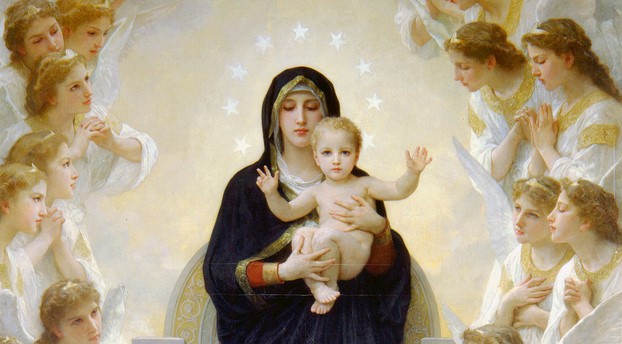
Mary's Assumed Role as Queen of Heaven
Updated at: 2023-08-05 13:19:32 (2 years ago by Melkisedeck Leon Shine)
๐ Mary's Assumed Role as Queen of Heaven ๐
When it comes to the role of the Virgin Mary, there is no denying the immense love and devotion that Catholics hold for her. At the center of this devotion is Mary's assumed role as the Queen of Heaven. But what does this title mean and why is it so significant in Christian Catholic spirituality?
1๏ธโฃ According to Catholic belief, Mary's assumption into Heaven is a testament to her special place in God's plan for salvation. Just as Jesus ascended into Heaven after his resurrection, Mary, the Mother of God, was also assumed into Heaven, body and soul.
2๏ธโฃ The assumption of Mary is not explicitly mentioned in the Bible, but it is deeply rooted in tradition and supported by biblical evidence. For instance, in the book of Revelation, we read about a woman crowned with twelve stars who gives birth to a male child. This woman is often interpreted as Mary, symbolizing her exalted status in Heaven.
3๏ธโฃ The Catechism of the Catholic Church teaches that Mary's assumption is a "singular participation" in her Son's resurrection and an anticipation of the future resurrection of all believers. This elevates her to a unique position among the saints and confirms her role as Queen of Heaven.
4๏ธโฃ Throughout the centuries, numerous Catholic saints and theologians have written about Mary's queenship. Saint John Damascene, for example, referred to her as the "Queen of all creation." Saint Louis de Montfort described her as the "Queen of saints" and the "Queen of angels."
5๏ธโฃ In Catholic spirituality, Mary's queenship is seen as a reflection of her close relationship with Jesus and her role as the Mother of God. Just as a queen holds a special place of honor and authority in a kingdom, Mary holds a unique position of intercession and mediation before her Son.
6๏ธโฃ In the Gospel of Luke, the angel Gabriel greeted Mary with the words, "Hail, full of grace, the Lord is with you" (Luke 1:28). This greeting emphasizes Mary's unique role in God's plan and her holiness, which further supports her title as Queen of Heaven.
7๏ธโฃ Mary's assumption and queenship are also connected to her perpetual virginity. Catholics believe that Mary, being the Mother of God, remained a virgin throughout her life and did not have any other children besides Jesus. This further emphasizes her purity and exalted status.
8๏ธโฃ Jesus, in his infinite wisdom, entrusted Mary as our spiritual mother while he was dying on the cross. He said to John, "Behold, your mother" (John 19:27). This demonstrates Jesus' desire for us to turn to Mary as a motherly intercessor and advocate in our spiritual journey.
9๏ธโฃ The early Church Fathers, such as Saint Augustine and Saint Jerome, also recognized Mary's queenship and her role as the New Eve. Just as Eve's disobedience brought sin into the world, Mary's obedience to God's will through her "yes" at the Annunciation reversed the effects of sin and brought forth salvation.
๐ The devotion to the Queen of Heaven is not meant to detract from the worship and adoration due to God alone. Instead, it serves as a way for Catholics to honor Mary as the most beloved and exalted creature, while acknowledging her unique relationship with her Son.
๐ Ultimately, the role of Mary as the Queen of Heaven invites us to deepen our relationship with her, seeking her intercession and following her example of faith and obedience to God. She stands as a powerful advocate for all believers, guiding us on our spiritual journey towards eternal life.
What are your thoughts on Mary's assumed role as Queen of Heaven? Do you find comfort and inspiration in her intercession and motherly love? Let us know your opinion!
Updated at: 2023-08-05 13:19:43 (2 years ago by Melkisedeck Leon Shine)
Mary, Mother of Perpetual Help: A Source of Comfort ๐
When we think of the Virgin Mary, a sense of peace and serenity washes over us. As Catholics, we hold a special place in our hearts for Mary, the Mother of God. Her unwavering faith and unconditional love for her son Jesus make her a source of comfort and inspiration in our lives.
Throughout the Bible, we see countless examples of Mary's profound role in salvation history. From the Annunciation, where she humbly accepted the call to become the mother of Jesus (Luke 1:26-38), to her presence at the foot of the cross, enduring unimaginable pain as her son suffered for our sins (John 19:25-27), Mary's unwavering faith in God's plan serves as a beacon of hope for us all.
The Catechism of the Catholic Church beautifully describes Mary's role in God's plan of salvation: "Mary's role in the Church is inseparable from her union with Christ and flows directly from it" (CCC 964). This reminds us that Mary's relationship with Jesus is not just a historical event, but a living reality that we can still experience today.
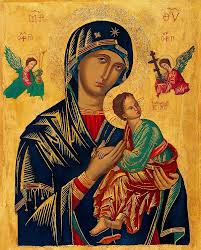
As Catholics, we turn to Mary in times of need, seeking her intercession and comfort. The image of Mary, Mother of Perpetual Help, is particularly special to us. This icon, depicting Mary holding the child Jesus, reminds us that she is always there to help us and guide us towards her son.
In the Gospel of John, Jesus entrusted Mary to be the mother of all believers when He said to the beloved disciple, "Here is your mother" (John 19:27). This signifies that Mary's role extends beyond her earthly life and into our lives as well.
The devotion to Mary, Mother of Perpetual Help, has been cherished by Catholics for centuries. This icon, believed to have been created in the 15th century, has brought comfort and solace to countless individuals. Its vibrant colors and tender depiction of Mary and Jesus serve as a visual reminder of the love and compassion they have for us.
Saint Alphonsus Liguori, a great saint of the Catholic Church, once said, "If you ever feel distressed during your day, call upon our Lady. Just say this simple prayer: 'Mary, Mother of Jesus, please be a mother to me now.' I must admit, this prayer has never failed me."
In times of uncertainty and despair, we can find solace in Mary's ever-present love and guidance. Just as a mother comforts her child, Mary offers us the comfort and reassurance we need to navigate life's challenges. We can confide in her, knowing that she understands our struggles and desires to bring us closer to her son.
The rosary, a powerful prayer tool in the Catholic faith, is another way we can seek comfort through Mary's intercession. By meditating on the mysteries of the rosary, we are invited to reflect on key moments in the life of Jesus and Mary, deepening our connection to them and finding solace in their presence.
The Catechism of the Catholic Church states, "By asking Mary to pray for us, we acknowledge ourselves to be poor sinners and we address ourselves to the 'Mother of Mercy,' the All-Holy One" (CCC 2677). Mary's intercession is a reminder that she is always ready to assist us and bring our needs before her Son.
Saints throughout history have also testified to the comforting presence of Mary in their lives. Saint Padre Pio once said, "Love the Madonna and pray the Rosary, for her Rosary is the weapon against the evils of the world today. All graces given by God pass through the Blessed Mother."
Mary, Mother of Perpetual Help, reminds us that we are never alone in our struggles. She is a constant source of comfort, guiding us towards her Son and interceding for us before the throne of God. Like a loving mother, she desires nothing more than our happiness and eternal salvation.
So, dear friends, in times of turmoil and uncertainty, let us turn to Mary, the Mother of Perpetual Help. Let us seek her intercession, pour out our hearts to her, and trust in her maternal care. Just as she comforted and supported Jesus throughout His life, she is here for us, offering her motherly comfort and guidance.
What does Mary, Mother of Perpetual Help, mean to you? How has her intercession and comfort impacted your life? Share your thoughts and experiences in the comments below. Let us continue to honor and cherish the blessed Virgin Mary, our source of comfort and inspiration. ๐น
May the loving presence of Mary, Mother of Perpetual Help, bring you peace, comfort, and guidance in all aspects of your life. May her intercession lead you closer to her Son, Jesus, and may you always find solace in her tender embrace.
Updated at: 2023-08-05 13:19:31 (2 years ago by Melkisedeck Leon Shine)
The Blessed Virgin Mary: A Channel of God's Grace
"Hail Mary, full of grace, the Lord is with thee!" These words, spoken by the angel Gabriel, forever changed the course of human history. ๐
The Virgin Mary, the mother of Jesus, holds a special place in the hearts of Catholics around the world. She is seen as a channel of God's grace, a vessel through which His love and blessings flow. ๐น
In the Bible, we see numerous examples of Mary's role as a channel of God's grace. From the moment of the Annunciation, when she humbly accepted God's plan for her life, to the wedding at Cana, where she interceded on behalf of the newlyweds, Mary's presence was a source of blessing. ๐
One of the most profound biblical examples of Mary's role as a channel of God's grace can be found in the Magnificat, her beautiful prayer of praise and thanksgiving. In Luke 1:46-55, Mary proclaims, "My soul magnifies the Lord, and my spirit rejoices in God my Savior." This prayer reminds us that Mary's faith and trust in God allowed her to be open to His grace and love. ๐
The Catechism of the Catholic Church teaches us that Mary is "the Mother of God" and "the model of the Church's faith." She is not only the physical mother of Jesus, but also the spiritual mother of all believers. Through her maternal intercession, she brings us closer to her son and helps us grow in holiness. ๐บ
Throughout history, countless saints and theologians have recognized the important role of Mary in our spiritual journey. St. Louis de Montfort, for example, wrote extensively about Mary's role as a channel of God's grace in his book "True Devotion to Mary." He encourages us to entrust ourselves to Mary's care, knowing that she will lead us closer to Jesus. โค๏ธ
The devotion to the Blessed Virgin Mary is deeply rooted in the Catholic tradition. From the earliest centuries, Christians have looked to Mary as a source of comfort, guidance, and intercession. Her gentle presence and unwavering faith are a shining example for all believers. โช
Mary's unique role as the Mother of God sets her apart from any other human being. She was chosen by God to be the vessel through which His Son would enter the world, bringing salvation to all. As Catholics, we deeply honor and love Mary, recognizing her as a powerful advocate and intercessor before God. ๐
In the words of St. Bernard of Clairvaux, a great medieval saint, "Of Mary there is never enough." This simple yet profound statement reminds us that Mary's love and grace are limitless. No matter how much we turn to her, she always has more to give. ๐ท
The Rosary, a beloved Catholic prayer, is a beautiful way to honor and seek the intercession of the Blessed Virgin Mary. Through meditating on the mysteries of Christ's life, death, and resurrection, we unite ourselves with Mary and open our hearts to God's grace. ๐ฟ
The Catholic Church teaches that Mary's role as a channel of God's grace is not limited to the past. She continues to intercede for us and bring us closer to her Son in the present. Just as she stood at the foot of the cross, offering her love and support to Jesus, she stands with us in our joys and sorrows today. ๐น
As Christians, we are called to imitate Mary's faith, humility, and love for God. Just as she said "yes" to God's plan for her life, we too must surrender ourselves to His will and trust in His providence. Mary shows us that through our openness to God's grace, miracles can happen. ๐
The devotion to Mary is not meant to detract from our worship of God, but rather to enhance it. She leads us closer to her Son, pointing us always towards Jesus. In the words of Pope Francis, "The Church is like Mary, her mother and model: a Church that is a mother, that has children, that has a mother's heart." ๐
In conclusion, the Blessed Virgin Mary is indeed a channel of God's grace. Her complete trust in God, her unwavering faith, and her motherly love make her a powerful intercessor on our behalf. Let us turn to her with confidence, knowing that she will guide us closer to her Son and shower us with God's abundant grace. ๐
What are your thoughts on the Blessed Virgin Mary as a channel of God's grace? How has her presence influenced your spiritual journey? Share your reflections and experiences in the comments below. ๐
Updated at: 2023-08-05 13:19:57 (2 years ago by Melkisedeck Leon Shine)
Mary, Mother of Hope: Strengthening Our Trust in God
๐1. In times of uncertainty and doubt, it is only natural for us to seek solace and guidance. As Christians, we are blessed to have the most compassionate and loving mother in Mary, the Mother of God. Her unwavering trust in God serves as an inspiration for us all, reminding us of the power of faith and hope.
๐2. Mary's journey began with the Annunciation, when the angel Gabriel appeared to her and proclaimed, "Do not be afraid, Mary, for you have found favor with God" (Luke 1:30). Despite the confusion and fear she may have felt, Mary responded with unwavering trust, saying, "Behold, I am the handmaid of the Lord; let it be to me according to your word" (Luke 1:38).
๐ช3. Mary's trust in God was further tested during her journey to Bethlehem, where she gave birth to Jesus in a humble manger. Despite the hardships and discomforts she faced, Mary's faith remained unshaken. She knew that God's plan was unfolding before her eyes, and she embraced it wholeheartedly.
๐น4. The significance of Mary's role as the Mother of God cannot be overstated. Through her, God's divine plan for salvation was brought into the world. As the Catechism of the Catholic Church teaches, "Mary's role in the Church is inseparable from her union with Christ and flows directly from it" (CCC 964). She is not just an ordinary woman; she is the chosen vessel through which God's love and mercy are made manifest.
โจ5. Mary's trust in God is a powerful reminder that we too can place our faith in Him, even in the most challenging of times. When we face difficulties or uncertainties, we can turn to Mary for guidance and intercession. Just as she trusted in God's plan for her life, we too can trust that He has a purpose for us.
๐6. In the Gospel of John, during the wedding at Cana, Mary demonstrated her unwavering trust in Jesus. When the wine ran out at the celebration, Mary said to Jesus, "They have no wine" (John 2:3). Despite Jesus initially responding, "Woman, what does this have to do with me?" (John 2:4), Mary simply turned to the servants and said, "Do whatever he tells you" (John 2:5). Her trust in her son's power was rewarded, as Jesus turned water into wine, performing His first public miracle.
๐ฟ7. Throughout history, Mary's intercession has been sought by countless individuals seeking strength, comfort, and hope. Her role as the Mother of Hope is beautifully described by Saint Bernard of Clairvaux, who said, "Turn to Mary in all your needs and you will be filled with hope." By turning to Mary, we are reminded of God's unending love and His desire to bring us closer to Him.
๐8. Another biblical example that showcases Mary's trust in God is her station at the foot of the cross. As Jesus was crucified, Mary stood there, witnessing the pain and suffering of her beloved son. In that moment, she could have questioned God's plan, but instead, she remained steadfast in her trust. As Saint John Paul II said, "Mary's steadfastness beneath the cross was a perfect act of hope" (Crossing the Threshold of Hope).
๐ฅ9. Mary's trust in God was not without sacrifice. She experienced immense sorrow and grief, yet she never wavered in her faith. Her unshakable trust in God's plan for salvation is a testament to her unwavering love for Him. Even in the most trying of circumstances, Mary serves as a shining example of hope and trust.
๐น10. The Catholic Church holds Mary in high esteem and recognizes her as the Mother of God. As the Catechism teaches, "The Church... honors her with filial affection and piety as a most beloved mother" (CCC 971). This honor is not meant to diminish the role of God but rather to acknowledge the unique and irreplaceable role that Mary played in His divine plan.
๐11. Throughout history, numerous saints have expressed their devotion and trust in Mary. Saint Maximilian Kolbe, a Polish Franciscan friar, said, "Never be afraid of loving the Blessed Virgin Mary too much. You can never love her more than Jesus did." This sentiment echoes the belief of countless Christians who find solace and guidance in Mary's loving presence.
๐ฟ12. Mary's trust in God is not limited to biblical times; it is a timeless and universal message that resonates with believers of all generations. Her example invites us to trust in God's plan for our lives, even when it seems unclear or challenging. In moments of doubt, we can seek Mary's intercession and draw strength from her unwavering faith.
๐13. As we reflect on Mary, the Mother of Hope, we are reminded of the words of Saint Augustine, who said, "Mary's life is a model for our own... Let us imitate her faith, her humility, her obedience, and her trust in God." Mary's life serves as a roadmap for us to navigate the challenges and uncertainties of our own lives, always with trust and hope in God.
โจ14. Today, let us turn to Mary, the Mother of God and our Mother, with open hearts and minds. Let us seek her intercession and guidance, knowing that she stands ready to help us navigate the complexities of life. In her, we find a beacon of hope, a source of strength, and an unwavering example of trust in God's divine plan.
๐น15. What are your thoughts on the role of Mary, the Mother of Hope, in strengthening our trust in God? How has Mary's example impacted your own faith journey? Let us remember that Mary is not only the Mother of Jesus but also our spiritual mother, always ready to guide and intercede for us. May we continue to seek her loving presence and emulate her unwavering trust in God.
Updated at: 2025-06-23 12:50:15 (7 months ago by Melkisedeck Leon Shine)
```htmlThis essay examines the pivotal role of Mary, the Mother of God, within Catholic theology, focusing on her significance in restoring humanity's relationship with the divine. Key concepts such as the Immaculate Conception, the concept of the New Eve, and Marian intercession will be explored through a lens of theological and historical analysis, drawing upon established theological frameworks and doctrines. We will analyze the narrative of Mary within the context of salvation history and assess its implications for contemporary faith.
The doctrine of the Immaculate Conception posits that Mary was conceived without original sin, a unique distinction amongst humanity. This concept, central to Catholic Marian theology, establishes Mary as a vessel entirely consecrated to Godโs plan. This preemptive grace, as understood within the framework of prevenient grace (the concept that God's grace precedes human action, preparing the heart for acceptance), allowed Mary to fully embrace God's will without the impediment of inherited sin. This contrasts starkly with Eve's disobedience in the Garden of Eden, which initiated humanity's estrangement from God. Mary's Immaculate Conception, therefore, provides the theological foundation for her role as the "New Eve," offering a counterpoint to Eve's transgression.
The Annunciation, the moment Gabriel announced Mary's divine motherhood, highlights the pivotal role of obedience. Mary's "fiat" โ "Let it be to me according to your word" โ signifies a complete surrender to God's will, a stark contrast to Eve's act of disobedience. This act of perfect obedience, understood within the framework of the theocentric model (placing God as the central focus), directly addresses the theological problem of original sin and lays the foundation for redemption. The Annunciation presents a radical shift from the fall, illustrating a path towards reconciliation with the divine through absolute obedience and faith. Applying this model practically requires a continual examination of our own obedience to God's will in daily life, recognizing that our compliance with his precepts acts as a mirror to Mary's and contributes to the restoration of our relationship with Him.
The comparison of Mary to the Ark of the Covenant, a sacred vessel holding the divine presence in the Old Testament, underscores her role as the bearer of Godโs grace. Just as the Ark symbolized God's presence among his people, Mary, through her womb, carried the incarnate Word of God, Jesus Christ. This symbolic equivalence serves to highlight Maryโs central role in the divine economy of salvation. The Visitation, where the unborn John the Baptist leaped in Elizabeth's womb upon Mary's arrival, further strengthens this concept, demonstrating the tangible outpouring of grace emanating from Mary. This resonates with the concept of sacramental theology which states that certain actions or objects become channels of divine grace.
Mary's role as intercessor, evident in episodes such as the wedding at Cana (where she interceded with Jesus to perform his first miracle), reinforces her maternal connection to humanity. This intercession is understood within the context of ecclesiology (the study of the church) in which the church acts as the mediator and acts between man and God. Similarly, Mary acts as a mediator between humankind and the grace of God, echoing the motherly concern and advocacy for her children. Her compassion and concern reflect a deep understanding of the human condition, facilitating our access to divine mercy and grace. We can model this by practicing compassion and advocacy for others as an extension of Mary's intercessory role.
The titles "Queen of Heaven and Earth" and the dogma of the Assumption highlight Mary's exalted position and the eschatological (end-times) hope she represents. Her queenship signifies her unique union with Christ and her participation in his reign. The Assumption, her bodily ascension into Heaven, serves as a powerful symbol of the ultimate triumph over death and the hope of resurrection for all believers. This aligns with the concept of theosis (divinization), which emphasizes the potential for humanity to achieve communion with God. Observing Maryโs glorified state offers believers a tangible hope for the fulfillment of Godโs promises in the afterlife. We can strive to emulate her holiness, seeing her life as a roadmap to achieving our own communion with the Divine.
Devotions like the Rosary, combined with theological affirmations found in the Catechism of the Catholic Church and the testimonies of saints, reinforce Mary's role in salvation history. The Rosary, through its meditative structure, fosters a deeper relationship with Christ and Mary, while the Catechism and saintly testimonies offer further theological insight and personal inspiration. These different methods โ meditation, theological study, and hagiography โ provide avenues for believers to engage with Maryโs role and its implications for their personal faith journey. This interdisciplinary approach to religious study provides a rich tapestry that enriches our understanding.
Mary's role as the New Eve transcends simple historical narrative; it constitutes a dynamic theological concept with profound implications for contemporary faith. Her obedience, intercession, and maternal care offer a powerful model for spiritual growth and a restoration of humanity's relationship with God. Further research could explore comparative religious perspectives on the concept of divine motherhood, and the psychological implications of Marian devotion. The enduring power of Mary's example challenges us to embrace a life of unwavering faith, service, and loveโa path that ultimately leads to a deeper communion with the divine.
Reader Pool: Considering the various theological perspectives presented, what are the practical implications of Mary's role as the "New Eve" for fostering a stronger relationship between individuals and their faith community?
```
Updated at: 2023-08-05 13:20:13 (2 years ago by Melkisedeck Leon Shine)
The Assumed Role of Mary in the Early Church
๐ Introduction ๐
In the early years of the Church, the role of Mary, the Mother of God, was not only highly regarded but also widely celebrated. As a devout Christian Roman Catholic, it brings me great joy to delve into the intriguing topic of Mary's assumed role during this significant period. Let us explore the fascinating aspects surrounding the beloved Mother of Jesus and her influence on the early Church.
1๏ธโฃ Mary, the Ever-Virgin ๐น
From a Christian perspective, it is crucial to acknowledge that the doctrine of Mary's perpetual virginity is deeply rooted in the early Church. It is believed that Mary remained a virgin before, during, and after the birth of Jesus Christ. This belief is based on biblical evidence, such as the Gospel of Matthew 1:25, which states, "But he did not consummate their marriage until she gave birth to a son. And he gave him the name Jesus."
2๏ธโฃ Mary, Mother of God ๐
One of the most significant roles Mary assumed in the early Church was that of the "Theotokos," meaning "Mother of God." This title emphasizes the belief that Mary gave birth to Jesus, who is both fully human and fully divine. This concept is supported by the Gospel of Luke 1:43, where Elizabeth proclaims, "But why am I so favored, that the mother of my Lord should come to me?"
3๏ธโฃ Mary, the New Eve ๐
In addition to being the Mother of God, Mary is often referred to as the New Eve in early Christian theology. Just as Eve played a critical role in the fall of humanity, Mary, through her obedience and humility, played an instrumental part in the redemption of mankind. This parallel is beautifully depicted in the Catechism of the Catholic Church (494), which states, "She is 'the new Eve,' the true mother of all the living."
4๏ธโฃ Mary, the Ark of the New Covenant โช
Another fascinating aspect of Mary's assumed role in the early Church is her association with the Ark of the Covenant. In the Old Testament, the Ark contained the tablets of the Ten Commandments, symbolizing God's presence among His people. Similarly, Mary, as the bearer of Jesus, came to be seen as the new Ark, carrying within her womb the Word of God made flesh. This connection is beautifully illustrated in the book of Revelation 11:19, where John sees "the ark of his covenant" in the heavenly sanctuary.
5๏ธโฃ Mary, the Intercessor ๐
Mary's intercessory role in the early Church cannot be overlooked. As a loving mother, she is believed to intercede on behalf of all believers, presenting their prayers to her Son, Jesus Christ. This belief is supported by the Gospel of John 2:3-5, where Mary intercedes at the Wedding at Cana, saying, "They have no more wine." This act of intercession led to Jesus' first miracle, highlighting her powerful role.
6๏ธโฃ Mary, a Model of Faith and Humility ๐บ
Mary's exemplary faith and humility have served as a model for Christians throughout history. Her "yes" to God's plan of salvation, as seen in Luke 1:38, where she says, "I am the Lord's servant. May your word to me be fulfilled," teaches us the importance of surrendering to God's will with trust and obedience. Her unwavering faith encourages us to emulate her virtues in our own lives.
7๏ธโฃ Mary, the Queen of Heaven ๐
The early Church also recognized Mary as the Queen of Heaven, acknowledging her exalted position as the Mother of God. This title finds its roots in the book of Revelation 12:1, where John sees "a woman clothed with the sun, with the moon under her feet, and a crown of twelve stars on her head." This depiction symbolizes Mary's role as the queenly mother of the Church.
8๏ธโฃ Mary, A Relationship with the Saints ๐
Mary's close relationship with the saints in the early Church is a testament to her esteemed role. Just as we can turn to our friends and family for intercessory prayers, we can also seek the intercession of Mary and the saints, who stand before the throne of God. This understanding is beautifully expressed in the Catechism of the Catholic Church (2683), which states, "Because of their communion with the saints, the Church is inseparably linked to the heavenly liturgy."
9๏ธโฃ Mary, An Inspiration to Artists ๐จ
Throughout the history of art, Mary has been a beloved subject of countless masterpieces. Painters, sculptors, and musicians have drawn inspiration from her beauty, grace, and purity. These artistic representations have not only captured Mary's physical appearance but also aimed to convey her spiritual significance to the early Church as the Mother of God.
๐ Mary, A Source of Hope and Comfort ๐
Mary's assumed role in the early Church also included being a source of hope and comfort for believers. Just as a mother consoles her children, Mary offers solace to those who approach her with their sorrows and joys. Her compassionate nature is reflected in her appearance to St. Juan Diego in Guadalupe, Mexico, where she shared a message of love and healing to bring peace to a troubled world.
๐ค Opinion ๐ค
As we reflect on the assumed role of Mary in the early Church, it is evident that her influence was profound and multifaceted. From her perpetual virginity to her intercessory role and her embodiment of faith and humility, Mary is a cherished figure in Christian Roman Catholic spirituality. Through her example, she continues to inspire countless believers to deepen their relationship with Jesus and strive for holiness.
What are your thoughts on Mary's assumed role in the early Church? How has her devotion impacted your spiritual journey? Let us celebrate the blessedness of the Mother of God and honor her role in our faith. ๐น๐โจ
Updated at: 2023-08-05 13:19:14 (2 years ago by Melkisedeck Leon Shine)
The Intercession of the Blessed Virgin Mary ๐
The role of the Blessed Virgin Mary in the Catholic faith is one that holds great importance and reverence. As the Mother of God, she is seen as a powerful intercessor for all believers. ๐น
The concept of intercession refers to the act of someone praying on behalf of others. In the case of the Blessed Virgin Mary, her intercession is believed to be particularly potent due to her special relationship with Jesus. ๐
Throughout the Bible, we see instances of individuals seeking the intercession of Mary. One notable example is the Wedding at Cana, where Mary, noticing that the wine had run out, intercedes with Jesus on behalf of the wedding couple. Jesus, in turn, listens to his mother's request and performs his first miracle, turning water into wine. ๐ท
This event serves as a powerful testimony to the intercessory power of the Blessed Virgin Mary. Her love and concern for others, combined with her close relationship with Jesus, allow her to bring our prayers and petitions directly to her Son. โจ
The Catechism of the Catholic Church states, "By asking Mary to pray for us, we acknowledge ourselves to be poor sinners and we address ourselves to the 'Mother of Mercy,' the All-Holy One." Mary's intercession is seen as a way to seek God's mercy and guidance in our lives. ๐
Catholic Saints have also written extensively about the intercession of the Blessed Virgin Mary. St. Louis de Montfort, for example, wrote in his famous book "True Devotion to Mary" about the power of Marian intercession and how it can lead us closer to Jesus. ๐
The rosary, a popular Catholic devotional prayer, is another way in which believers seek the intercession of Mary. By praying the Hail Mary and meditating on the mysteries of the life of Christ, Catholics believe they can draw closer to God through the intercession of the Blessed Virgin Mary. ๐ฟ
One of the most remarkable aspects of Mary's intercession is that it extends to all aspects of our lives. Whether we are seeking guidance, healing, or simply comfort, Mary is always ready to intercede on our behalf. Her love for us as her children knows no bounds. โค๏ธ
The Gospel of Luke provides further evidence of Mary's intercessory role. When the Angel Gabriel visited Mary to tell her she would bear the Son of God, he greeted her, saying, "Hail, full of grace, the Lord is with you" (Luke 1:28). This greeting acknowledges Mary's unique position as the one chosen by God to be the Mother of Jesus. ๐
The Catholic Church teaches that Mary's intercession is not a substitute for our direct relationship with God, but rather a way to enhance and deepen our connection to Him. It is through Mary that we can better understand and appreciate the love and mercy of our Heavenly Father. ๐
Another biblical example of Mary's intercession can be found at the foot of the Cross. While Jesus was dying, he entrusted his mother to the care of the Apostle John, saying, "Woman, behold, your son!" and to John, "Behold, your mother!" (John 19:26-27). In this moment, Jesus established Mary's role as the Mother of all believers, symbolizing her intercessory role in the life of the Church. ๐
Mary's intercession is not limited to her time on Earth but continues even in Heaven. The book of Revelation describes a vision of Mary appearing as the "woman clothed with the sun" who gives birth to a male child (Revelation 12:1-6). This image represents Mary's ongoing intercession for the Church and all believers. ๐
The Catholic Church teaches that Mary's intercession is so powerful that she can bring about miracles and healings. Countless testimonies and stories from believers all over the world attest to the miraculous intercession of the Blessed Virgin Mary in times of need. ๐
As Catholics, we are encouraged to turn to Mary in all aspects of our lives. Whether we are seeking guidance in our relationships, careers, or spiritual journeys, Mary is always there to intercede for us. Her love and compassion are boundless, and she desires nothing more than to lead us closer to her Son. ๐น
In conclusion, the intercession of the Blessed Virgin Mary is a beautiful aspect of the Catholic faith. Through her prayers and love, she brings us closer to Jesus and helps us experience His mercy and grace in our lives. May we always turn to Mary as our loving mother and seek her intercession in all our needs. ๐
What are your thoughts on the intercession of the Blessed Virgin Mary? Do you have any personal experiences or testimonies of her intercession in your life?
Updated at: 2023-08-05 13:19:23 (2 years ago by Melkisedeck Leon Shine)
Mary, Mother of Mercy: An Inspiration for Compassion ๐
The Blessed Virgin Mary, also known as the Mother of God, is a figure of immense love and compassion. She is a shining example for all Christians to follow when it comes to showing mercy and compassion towards others.
Mary's compassion can be seen in numerous instances in the Bible. One such example is the Wedding at Cana, where she interceded on behalf of the hosts when they ran out of wine. She was concerned for their embarrassment and approached her son, Jesus, who then performed his first miracle by turning water into wine (John 2:1-11).
Another powerful example of Mary's compassion can be found at the foot of the cross, where she stood in the midst of immense suffering and pain. Despite her heartbreak, she showed strength and love, exemplifying true compassion even in the face of unimaginable sorrow (John 19:25-27).
The Catholic Church teaches that Mary's role as the Mother of Mercy extends beyond her earthly life. In the Catechism of the Catholic Church, it states, "Mary, the all-holy ever-virgin Mother of God, is the masterwork of the mission of the Son and the Spirit in the fullness of time" (CCC, 721).
As Catholics, we look to Mary as our intercessor, someone who can bring our prayers and petitions to her Son. This is beautifully captured in the words of Saint John Paul II, who said, "Mary is the one who, knowing the mercy of God better than anyone else, can cause the very fountain of that mercy to gush forth upon people" (Homily, 1 January 2001).
Mary's compassion inspires us to be more merciful towards others, just as she is towards us. She teaches us the importance of reaching out to those in need, showing them compassion, and providing them with love and support.
The Bible tells us in Luke 1:46-55 that Mary herself proclaimed, "My soul magnifies the Lord, and my spirit rejoices in God my Savior, for he has looked on the humble estate of his servant." Mary recognized her own humility and dependence on God, and her humility inspires us to do the same.
Many saints throughout history have also drawn inspiration from Mary's compassion. Saint Mother Teresa of Calcutta, known for her tremendous acts of mercy, once said, "In loving one another through our works, we bring an increase of grace and a growth in divine love" (No Greater Love).
Mary's role as the Mother of Mercy is not only limited to those who follow the Catholic faith. She is a universal figure of love, compassion, and mercy, and her intercession is sought by people from all walks of life.
In the Gospel of Luke, Mary's cousin Elizabeth exclaimed, "Blessed are you among women, and blessed is the fruit of your womb!" (Luke 1:42). This shows that Mary's unique role as the Mother of God is recognized and revered within the Christian community.
Mary's compassion extends beyond her role as a mother. She is also a model of faith and trust in God's plan. When the angel Gabriel appeared to her and announced that she would conceive a child, she responded with faith, saying, "Behold, I am the handmaid of the Lord; let it be to me according to your word" (Luke 1:38).
Pope Francis, the current leader of the Catholic Church, has often referred to Mary as the "Mother of Mercy." He once said, "Mary is the Mother who never refuses us her compassion" (Angelus, 20 September 2015). This reinforces the belief that Mary's compassion is boundless and always available to those who seek it.
As Christians, we are called to show mercy and compassion to others, just as Mary does. In the Gospel of Matthew, Jesus himself tells us, "Blessed are the merciful, for they shall obtain mercy" (Matthew 5:7). Mary serves as a guiding light in this aspect of our faith.
Mary's compassion is a reminder that we are all called to be vessels of God's mercy and love. Just as she carried Jesus within her, we are called to carry his love within us and share it with the world.
In conclusion, Mary, Mother of Mercy, is an incredible inspiration for compassion. Her love, strength, and unwavering faith serve as a beacon for Christians everywhere. Let us strive to follow her example and show mercy and compassion to others, just as she does. What are your thoughts on Mary's compassionate nature? How has she inspired you to show mercy to others?
Updated at: 2025-06-22 00:57:53 (7 months ago by Melkisedeck Leon Shine)
```htmlThis article presents a comprehensive analysis of reported miracles associated with Marian shrines, integrating theological and sociological perspectives. We will define key concepts to establish a robust analytical framework. A miracle, in this context, is defined as an event defying natural laws, attributed to divine intervention. A Marian shrine is a sacred site linked to apparitions or significant events related to the Virgin Mary. Intercession refers to Mary's role as a mediator between humanity and God within Catholic theology. The analysis utilizes sociological theories, such as Durkheim's concept of collective effervescence, and psychological perspectives on faith healing and the placebo effect, alongside theological interpretations of Marian apparitions and their place within Catholic doctrine. This interdisciplinary approach facilitates a nuanced understanding of the complex phenomena surrounding Marian shrines.
Marian shrines function as powerful centers of Catholic faith, attracting millions of pilgrims annually. This enduring appeal can be explained through Durkheim's theory of collective effervescence, which describes the heightened social energy generated by shared religious experiences. The collective belief in Mary's intercession and the potential for miraculous healings fosters a strong sense of community and shared purpose among pilgrims. This shared experience amplifies individual faith, creating an emotionally charged environment conducive to reported miraculous healings and spiritual transformations. Empirical evidence, such as numerous testimonials of healing and spiritual renewal, supports this observation. Furthermore, the well-documented placebo effect plays a significant role; the fervent belief and expectation of healing can trigger the body's innate restorative mechanisms, potentially contributing to perceived miraculous recoveries. This interaction between faith, social context, and physiological response is a crucial aspect of understanding the phenomena observed at these sites.
Several prominent Marian shrines provide compelling case studies illustrating these dynamics. Our Lady of Guadalupe in Mexico City, with its iconic image, serves as a powerful symbol of faith and national identity, attracting vast numbers of pilgrims. The reported healing waters of Lourdes, France, highlight the interplay between faith, expectation, and potential psychosomatic effects in reported physical cures. The apparition at Fatima, Portugal, and its associated "Miracle of the Sun," exemplify the impact of mass-witnessed events on faith and belief systems. Similar collective experiences are documented in Medjugorje, Bosnia and Herzegovina (with its ongoing apparitions), and Knock, Ireland (known for its silent apparition), demonstrating the transcultural nature of these phenomena and the diverse ways in which faith manifests itself.
The recitation of the rosary, a central devotional practice at many Marian shrines, plays a significant role. This repetitive prayer fosters a meditative state, potentially contributing to spiritual experiences and feelings of peace and comfort. The Rosary of the Seven Sorrows, in particular, offers a framework for connecting personal struggles with Mary's suffering, providing solace and strength. The intense prayer and devotion at these sites are often interpreted as strengthening the potential for divine intervention, contributing to reported miracles of healing and spiritual conversion. The ritualistic aspects of these practices should not be overlooked, as they contribute significantly to the overall experience and psychological impact on pilgrims.
Reported miracles at Marian shrines encompass not only physical healing but also profound emotional and spiritual transformations. The theological concept of Mary's intercession, central to Catholic doctrine, positions her as a powerful advocate mediating between humanity and God. This belief significantly influences experiences at these shrines, offering hope for healing and restoration to those suffering emotionally, physically, or spiritually. Reported conversions further highlight the transformative power of faith and the pivotal role of Mary's intercession in these spiritual journeys. The combination of spiritual and physical aspects creates a complex healing process that extends beyond mere physiological improvement.
The pilgrimage itself is a crucial aspect of the transformative experience. The journey to a Marian shrine provides a period of introspection, prayer, and detachment from daily stressors. This focused devotion contributes to spiritual growth, strengthening one's relationship with God and deepening faith. Social interaction among fellow pilgrims further enhances this transformative impact, fostering a sense of community and shared purpose that extends beyond the immediate pilgrimage experience. The psychological and social benefits of pilgrimage should not be understated in understanding the reported occurrences at Marian shrines.
The reported miracles associated with Marian shrines represent a complex interplay of faith, collective belief, psychological factors, and theological interpretations. While scientific explanations may account for some reported healings, the enduring power of these sites stems from their capacity to foster strong community, shared experiences, and profound spiritual transformations. Future research should utilize mixed-methods approaches, integrating quantitative analyses of reported healings with qualitative studies exploring the subjective experiences of pilgrims. This would provide a more comprehensive understanding of these multifaceted phenomena. Furthermore, incorporating a cross-cultural perspective, analyzing socio-economic factors influencing the popularity and perceived efficacy of Marian shrines across diverse contexts, is crucial for a holistic understanding.
This analysis suggests that the significance of Marian shrines extends beyond literal interpretations of miracles. The spiritual and social benefitsโincluding strengthened faith, community building, and emotional healingโhighlight their crucial role in religious practice. These findings underscore the need for ongoing theological reflection on Mary's role within the Church and continued psychological and sociological study of faith-based healing and community formation. A more integrated approach, combining theological, psychological, and sociological perspectives, is vital for comprehending the depth and complexity of these phenomena.
Reader Pool: Considering the interplay of faith, social dynamics, and potential psychological effects at Marian shrines, how can future research refine methodologies to more accurately assess the impact of these sites on individuals and communities?
```
Updated at: 2023-08-05 13:19:30 (2 years ago by Melkisedeck Leon Shine)
Mary, Queen of Angels: Protector and Guide ๐
๐ Introduction: As a Christian Roman Catholic, I hold a deep reverence for the Virgin Mary, the Mother of God. She is not only the mother of Jesus, but also a powerful intercessor and guide in our spiritual journey. Let us explore the role of Mary as the Queen of Angels, who lovingly protects and guides us.
๐น Mary's Unique Role: Mary holds a special place in Christianity, as she was chosen by God to bear His Son, Jesus Christ. The Bible tells us in Luke 1:28, "Hail, full of grace, the Lord is with you!" Her unique role as the Mother of God sets her apart and gives her a special influence over the heavenly realm.
๐๏ธ Protectress of Souls: Mary, as the Queen of Angels, is entrusted by God with the task of protecting our souls from the snares of the enemy. Just as a loving mother shields her children from harm, Mary intercedes for us before the heavenly hosts, defending us against spiritual attacks.
๐ Guiding Light: In times of confusion and darkness, Mary serves as a guiding light, leading us towards her Son, Jesus. She always points us to Him, saying as she did at the wedding feast of Cana, "Do whatever He tells you" (John 2:5). Her wisdom and guidance help us navigate the challenges of life with faith and hope.
โจ Mary's Heavenly Court: Mary, as the Queen of Angels, presides over a heavenly court of angels who are ready to assist us in our spiritual journey. Just as earthly queens have a retinue of attendants, Mary's angelic court is at her command, ready to provide guidance, protection, and comfort to those who seek her intercession.
๐ฟ Holy Rosary: One of the most powerful devotions to Mary is the Holy Rosary. When we pray the Rosary, we join Mary in meditating upon the mysteries of her Son's life. It is a beautiful way to honor her and seek her intercession in our lives. As Pope St. John Paul II said, "Through the Rosary, the faithful receive abundant grace, as though from the very hands of the Mother of the Redeemer."
๐ Miracles and Apparitions: Throughout history, Mary has appeared to various individuals and communities, bringing messages of love, hope, and conversion. These apparitions, such as Our Lady of Guadalupe or Lourdes, testify to her role as the Queen of Angels and her desire to lead us closer to God. These miracles and apparitions offer us a glimpse of Mary's love and concern for humanity.
๐ซ Immaculate Conception: The dogma of the Immaculate Conception, proclaimed by Pope Pius IX in 1854, affirms that Mary was conceived without the stain of original sin. This unique privilege bestowed upon her by God reflects her purity and holiness, making her an ideal intercessor and guide for us as we strive for sanctity in our own lives.
๐บ Catholic Saints' Devotion: Numerous Catholic saints have had a deep devotion to Mary, recognizing her as their mother, advocate, and Queen. St. Maximilian Kolbe, known for his heroic sacrifice in the Auschwitz concentration camp, considered Mary to be the perfect instrument of the Holy Spirit and encouraged others to consecrate themselves to her.
๐ฅ The Flame of Love: The Flame of Love Movement, approved by the Catholic Church, emphasizes the role of Mary as the Queen of Angels and the Mediatrix of all graces. This movement encourages us to unite ourselves with Mary's intentions and to allow her to guide and transform our lives through her motherly love.
๐ Catechism of the Catholic Church: The Catechism affirms Mary's unique role in salvation history, stating, "By her complete adherence to the Father's will, to his Son's redemptive work, and to every prompting of the Holy Spirit, the Virgin Mary is the Church's model of faith and charity" (CCC 967). Her obedience and faithfulness serve as an example for us all.
๐ Biblical Examples: The Bible provides us with several instances where Mary, as the Queen of Angels, plays a significant role. In Revelation 12:1, she is depicted as a woman clothed with the sun and crowned with twelve stars, symbolizing her exalted status in Heaven. Additionally, Mary's presence at the foot of the cross (John 19:25-27) demonstrates her enduring love and compassion for humanity.
๐น Devotion to Mary: Devotion to Mary is not worship but a special veneration given to her as the Mother of God. Through our devotion, we honor her, seek her intercession, and strive to imitate her virtues. As we draw closer to Mary, we inevitably draw closer to Jesus.
๐ฃ๏ธ Follow-up questions: How has your relationship with Mary influenced your spiritual journey? Have you experienced the guidance and protection of Mary in your life? How do you incorporate devotion to Mary into your daily prayers?
๐ Conclusion: Mary, Queen of Angels, holds a significant place in the hearts of Christians. As a loving mother, protectress, and guide, she intercedes for us before the heavenly court. Let us embrace her maternal love, seek her guidance, and honor her as we journey towards our ultimate goal of eternal life with God. May Mary, the Queen of Angels, bless and protect us always!